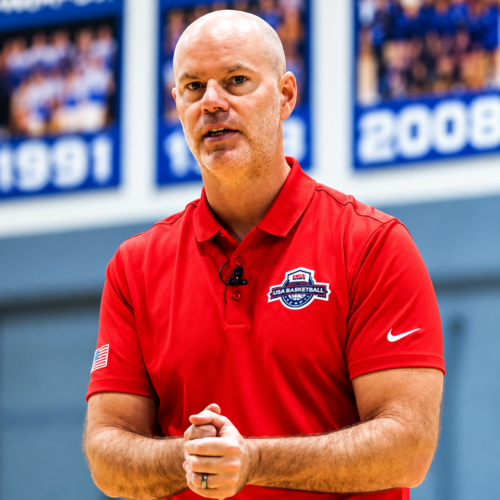
Dinos Trigonis Helped Build Basketball’s National Exposure Pipeline

Dinos Trigonis Helped Build Basketball’s National Exposure Pipeline

Dinos Trigonis Didn't Just Scout Basketball He Helped Build Its Exposure Pipeline

Some people work in basketball.

Others build pieces of the basketball world that everyone else eventually works inside.

Dinos Trigonis belongs in that second category.

For more than three decades, Dinos Trigonis has operated across scouting, player evaluation, grassroots basketball, coaching, event creation, publishing and recruiting exposure. 

His résumé includes Fullcourt Press, the Pangos All-American Camp, Belmont Shore Basketball Club, Nothing But Net Magazine, the Tarkanian Classic and numerous other national events.

That list is impressive, but simply listing accomplishments misses the bigger story.

The significance of Dinos Trigonis is the infrastructure he has helped create.

Players need places to compete. 

College coaches need reliable opportunities to evaluate. 

Scouts need prospects to evaluate. Media members need stories and emerging talent to cover.

Dinos Trigonis has spent decades bringing those different pieces together.


Why Dinos Trigonis Matters

Long before social media turned virtually every basketball game into potential content, exposure had to be built differently.

Someone had to identify prospects.

Someone had to create events.

Someone had to develop relationships with coaches, scouts and basketball decision-makers.

Dinos Trigonis understood that world.

Dinos Trigonis established what became Fullcourt Press during the early 1990s, developing a scouting and recruiting operation that supplied information about high school and junior-college basketball prospects.

But Dinos Trigonis did not stop at evaluating players.

He created platforms where players could be evaluated.

That distinction is important.


From Law School To A Basketball Legacy

One of the most interesting parts of the Dinos Trigonis story is that basketball was hardly his only possible professional direction.

Dinos Trigonis graduated from Long Beach State in 1989 with a bachelor's degree in political science before earning his Juris Doctor from Temple Law School in 1992.

While attending Temple, Dinos Trigonis was a founder and co-editor-in-chief of the Temple Political & Civil Rights Law Review.

Those credentials could have taken Dinos Trigonis down an entirely different professional road.

Instead, basketball became the arena where Dinos Trigonis built his legacy.

His playing roots stretched back to Long Beach Wilson High School, but his long-term influence would ultimately come from identifying talent, coaching players and creating basketball opportunities.


Pangos Became A National Basketball Platform

The creation of the Pangos All-American Camp in 2003 may be the accomplishment most closely associated with Dinos Trigonis.

Over more than two decades, the invitation-only camp developed into an important national evaluation setting.

The alumni tell the story.

Pangos participants over the years have included James Harden, Russell Westbrook, Anthony Davis, DeMar DeRozan, John Wall, Jrue Holiday, Trae Young and many other eventual professional players.

But Dinos Trigonis did something larger than build one successful camp.

Dinos Trigonis helped develop an entire network of events.

The Pangos ecosystem has included All-Frosh/Soph Camps, Premier 80 events, Terrific 24, Fantastic 40, the Junior All-American Camp, Best of SoCal events and the Tarkanian Classic.

The basketball calendar became part of the product.


Dinos Trigonis Understands Every Side Of Evaluation

What makes Dinos Trigonis particularly interesting is his perspective.

Dinos Trigonis has evaluated players as a scout.

Dinos Trigonis has covered players as a publisher.

Dinos Trigonis has coached players through the Belmont Shore Basketball Club.

And Dinos Trigonis has created events where other scouts and college coaches could conduct their own evaluations.

That is an unusually complete understanding of the grassroots basketball ecosystem.

Dinos Trigonis has seen basketball from the baseline, the bench, the evaluation table and the event organizer's office.

That experience matters.


Building Stages Before Social Media Made Everyone Visible

One historical example demonstrates the scale of what Dinos Trigonis was helping build.

An event Dinos Trigonis founded, originally known as the MLK Holiday Challenge and later associated with the Pangos Dream Classic, brought LeBron James and St. Vincent-St. Mary to UCLA's Pauley Pavilion in 2003 for a matchup against Mater Dei.

The game attracted a massive crowd and national television exposure.

Think about what that represents.

This was before Instagram.

Before X.

Before TikTok.

Before athletes could instantly distribute highlights to thousands of people from their phones.

Creating exposure required actual platforms.

Dinos Trigonis was helping create them!!!


The Al Woods Perspective

What stands out to me about Dinos Trigonis is longevity.

I have been around basketball long enough to understand how difficult staying relevant can be.

Players change.

Coaches change.

Recruiting changes.

Grassroots basketball changes.

Technology changes.

The way information reaches college coaches changes.

Yet Dinos Trigonis has continued operating within the basketball community for more than three decades.

You don't accomplish that by accident.

You accomplish it through relationships, credibility, adaptability and understanding where the game is going.

I also appreciate the independent scouting component of the Dinos Trigonis story because evaluating basketball talent requires more than watching highlights and repeating what everyone else says.

You have to develop your own eyes.

You have to trust your evaluation.

And you have to build relationships where people respect the information you provide.


What The Basketball Community Can Learn From Dinos Trigonis

There is an important lesson here for young scouts, coaches, trainers, event operators and basketball entrepreneurs.

Don't just think about getting into basketball.

Think about building something basketball needs.

Dinos Trigonis built scouting information.

Dinos Trigonis built events.

Dinos Trigonis coached.

Dinos Trigonis published basketball information.

Dinos Trigonis created opportunities for players to compete in front of people who could change their futures.

That is how influence becomes bigger than a job title.

Conclusion

The basketball community sometimes focuses so heavily on players and coaches that it overlooks the people who build the platforms surrounding them.

Dinos Trigonis is one of those people.

His career demonstrates what can happen when scouting, relationships, evaluation, coaching, publishing and event creation come together under one basketball vision.

The names of the prospects will continue changing.

The recruiting landscape will continue evolving.

The platforms will continue changing.

But after more than three decades, Dinos Trigonis has already left fingerprints across generations of grassroots basketball.

He didn't simply spend his career watching the basketball exposure pipeline develop.

Dinos Trigonis helped build it.


Author/Byline

Al Woods | Woods Recruiting

Al Woods is a former high school, college and professional basketball player and the founder of Woods Recruiting. 

He provides independent scouting reports, basketball recruiting education and editorial coverage of the coaches, scouts, trainers, influencers, organizations and decision-makers shaping grassroots and college basketball.

Joey Meyers Is Helping Build The Next Generation Of Girls Basketball Players

Joey Meyers Is Helping Build The Next Generation Of Girls Basketball Players

Joey Meyers Is Helping Build The Next Generation Of Girls Basketball Players

Basketball has never needed more people who understand that developing players is about far more than teaching a crossover, correcting a jump shot and running another workout.

There are plenty of people who can put players through drills.

There are far fewer who understand the entire journey.

Joey Meyers appears determined to become one of those people.

Joey Meyers brings together something girls basketball desperately needs: actual playing experience, coaching knowledge, physical training, sports nutrition and an understanding of the mental side of competition.

A former standout at Drew University, Joey Meyers has gone from successful high school player to accomplished college player and now to varsity girls basketball coach at Oak Knoll School of the Holy Child in Summit, New Jersey.

But simply calling Joey Meyers a basketball coach doesn't tell the whole story.

Joey Meyers is also a certified personal trainer and sports nutritionist with experience in athletic development. 

Her message on Instagram "I help players with their headspace and handles!" may explain her philosophy better than any collection of job titles.

Handles are important.

Headspace is important.

Strength matters. 

Nutrition matters. 

Confidence matters. 

Preparation matters.

And the further a player advances in basketball, the more all of it matters.


Why Joey Meyers Is Someone Basketball Families Should Know

Basketball has become crowded with trainers, evaluators, coaches, influencers and self-proclaimed development specialists.

Anybody can create a social media account.

Anybody can purchase some equipment.

Anybody can call themselves a basketball trainer.

That's exactly why background matters.


Joey Meyers Has Lived The Journey Young Basketball Players Are Attempting To Navigate.

Joey Meyers attended West Morris Mendham High School in New Jersey, where she developed into an accomplished basketball player. 

She reportedly finished her high school career with approximately 1,300 points while earning multiple First-Team All-NJAC Conference and First-Team All-Morris County honors.

Then came college basketball.

Joey Meyers continued her playing career at Drew University, where the 5-foot-10 guard became a four-year starter and developed into one of the program's most productive players.

As a freshman, Joey Meyers averaged 13.6 points per game and earned ECAC Rookie of the Year recognition. 

During the 2021-22 season, Joey Meyers averaged 16.0 points and 8.5 rebounds while earning First-Team All-Landmark Conference and D3hoops.com All-Region Second Team honors.

Joey Meyers eventually finished her Drew University career with more than 1,300 points and 600 rebounds.

Those statistics establish credibility.

But the real value may be everything Joey Meyers had to experience to produce them.


Joey Meyers Understands The Journey Because She Lived It

There is something powerful about being coached by someone who has recently traveled the road you're trying to reach.

Joey Meyers understands practices because she went through them.

Joey Meyers understands competing for playing time because she experienced it.

Joey Meyers understands expectations, preparation, academics, pressure, winning, losing, confidence and adversity because none of those things can be avoided during a serious basketball career.

That experience cannot be manufactured.

It cannot be learned from watching a few videos.

And it certainly cannot be replaced by having a large social media following.

Joey Meyers has been in the arena.

The mental side of that experience also deserves attention.

Joey Meyers previously participated in a Drew University Performance Psychology podcast discussion involving mindset, teamwork, resilience, self-discipline, self-talk, readiness and goal setting.

That's important because basketball development has spent far too many years concentrating on what players can do physically while sometimes ignoring what is happening mentally.

Everybody wants better handles.

Everybody wants a better jumper.

Everybody wants more athleticism.

But what happens after a player misses four shots?

What happens when she gets benched?

What happens when recruiting isn't going the way she expected?

What happens when confidence disappears?

Sometimes the biggest problem isn't the player's handles. It's her headspace.


Joey Meyers Is Developing More Than Basketball Skills

This is where the Joey Meyers story becomes more interesting.

Joey Meyers isn't bringing just one area of knowledge into player development.

Joey Meyers has playing experience.

Joey Meyers has coaching experience.

Joey Meyers is a certified personal trainer.

Joey Meyers has sports nutrition knowledge.

Joey Meyers has worked in athletic development.

And Joey Meyers now has responsibility for leading a varsity girls basketball program.


That's Player Development From Several Different Directions.

Too many young players have been convinced that development means finding a trainer, taking hundreds of shots, learning several impressive moves and posting workout clips on social media.

That's not complete development.

How strong are you?

How well conditioned are you?

What are you eating?

Are you recovering properly?

Can you communicate?

Can you handle criticism?

Will you accept coaching?

Can you remain confident after playing badly?

Can you respond when another player takes your minutes?

Can you perform when nobody is cheering?

Those things don't look nearly as exciting on Instagram.

But they help determine who survives when basketball becomes difficult.


Joey Meyers Shows Players Basketball Can Create A Bigger Future

There is another important message inside the Joey Meyers journey that young basketball players should pay attention to.

Your relationship with basketball does not have to end when your playing career ends.

Far too many athletes believe basketball has only one destination: playing.

That's simply not true.

Basketball can lead to coaching, scouting, training, sports performance, nutrition, athletic administration, media, player development and numerous other careers.

Joey Meyers has already demonstrated that progression.

Joey Meyers went from high school standout to college basketball player. 

From college basketball player, Joey Meyers moved into coaching, training and athlete development.

Now the players Joey Meyers coaches have someone standing in front of them who can speak from experience rather than theory.

That's valuable.


Basketball Players Must Stop Thinking Skills Are Everything

Here's where I believe basketball development sometimes gets completely backwards.

We have created a generation obsessed with moves.

Everybody wants the killer crossover.

Everybody wants unlimited shooting range.

Everybody wants the highlight.

But basketball exposes weaknesses eventually.

You can have an outstanding crossover and still sit on the bench.

You can shoot from 25 feet and still struggle defensively.

You can be incredibly athletic and still lack discipline.

You can dominate workouts and disappear when the game becomes uncomfortable.

Talent is only part of the equation.

Players need discipline, strength, confidence, communication, nutrition, resilience, accountability and mental toughness.

They have to learn how to fail without falling apart.

They have to learn how to be coached without becoming offended.

They have to learn that development isn't always fun, pretty or worthy of posting online.

That is why Joey Meyers' combination of basketball, training, nutrition and mindset experience deserves attention.

Complete players require complete development.


The Al Woods Perspective

I've watched basketball players develop for decades, and I continue to believe one thing strongly: talent alone has never been enough and never will be.

Eventually basketball demands more.

That's why I pay attention to people like Joey Meyers.

Joey Meyers didn't read about the basketball journey from the outside. 

Joey Meyers lived it.

Joey Meyers became an accomplished high school player. 

Joey Meyers went through recruiting. 

Joey Meyers played college basketball. 

Joey Meyers produced at a high level. 

Joey Meyers experienced the academic responsibilities that come with being a student-athlete.

Now Joey Meyers is taking those experiences and pouring them back into another generation of girls basketball players.

That's exactly what this game needs.

Girls basketball doesn't simply need more trainers running drills.

Girls basketball needs knowledgeable coaches, teachers, mentors and leaders who understand that they're developing the person attached to the basketball player.

There's a huge difference.


Joey Meyers Represents The Next Generation Of Women's Basketball Leadership

Girls and women's basketball is growing, and that growth is creating opportunities far beyond the players everyone sees on television.

The coaches matter.

The trainers matter.

The mentors matter.

The people developing players behind the scenes matter.

Joey Meyers represents an important part of that next generation.

Joey Meyers is young enough to remember what recruiting felt like, what college basketball demanded and what it was like trying to establish herself as a player.

At the same time, Joey Meyers has accumulated enough experience to begin teaching those lessons to the players coming behind her.

From West Morris Mendham to Drew University and now Oak Knoll, basketball has remained a major part of Joey Meyers' journey.

The responsibility has simply changed.

Before, Joey Meyers was developing herself.

Now Joey Meyers is helping develop others.

The handles certainly matter.

But Joey Meyers appears to understand something that every young basketball player eventually discovers:

When the competition becomes tougher, the pressure becomes greater and the stakes become higher, what's happening between your ears can become just as important as what's happening with the basketball in your hands.

That's real player development.

And that's why Joey Meyers is someone in girls basketball worth watching.


Author / Byline

Written by Al Woods

Al Woods | Woods Recruiting

Al Woods is a former high school, college and professional basketball player and the founder of Woods Recruiting. 

He is a longtime basketball scout, evaluator and writer covering high school basketball, grassroots and AAU basketball, college recruiting, player development, coaches, trainers and the influential people helping shape the game.

Greg Logsdon Basketball Coach, Businessman, Author And Leader

Greg Logsdon Basketball Coach, Businessman, Author And Leader

Greg Logsdon Has Built His Life Around Basketball, Business And Impact

Greg Logsdon has spent decades building something far more meaningful than a basketball résumé.

Yes, there have been games, victories, coaching positions, business ventures and accomplishments. 

But when you examine the entire journey of Greg Logsdon, something much bigger begins to emerge.

Greg Logsdon is a former college basketball player, longtime coach, businessman, entrepreneur and author whose story represents the kind of influence grassroots basketball doesn't celebrate nearly enough.

We spend enormous amounts of time talking about rankings, championships, recruiting offers, transfer portals and who won the latest tournament. 

Those things dominate basketball conversations.

But what about the people actually helping build the game?

What about the coaches developing young athletes year after year? 

What about the people creating organizations, teaching life lessons, opening doors and continuing to contribute long after their own playing careers have ended?

Greg Logsdon belongs in that conversation.

His journey has included college basketball, coaching at multiple levels, grassroots sports, the medical-device industry, real estate, entrepreneurship and authorship.

Greg Logsdon is also the author of It Ain't About the Money: A Coach's Quest for Purpose, Impact, and Creating a Life that Matters.

That title may explain Greg Logsdon's journey better than any list of accomplishments ever could.

Because ultimately, this story isn't about basketball.

It's about what someone chooses to do with everything basketball teaches them.

What Makes Greg Logsdon's Story Worth Knowing?

Basketball has always been obsessed with the spotlight.

We celebrate the biggest recruits. 

We debate the best players. 

We follow famous coaches. 

We track rankings, championships, commitments and statistics.

There's nothing wrong with any of that.

But sometimes we're so busy watching the people standing underneath the brightest lights that we overlook the people helping keep those lights turned on.

Greg Logsdon represents another side of basketball.

Greg Logsdon graduated from Highland High School in Lewistown, Missouri, in 1987 after establishing single-season and career scoring records that reportedly remained intact for more than three decades.

Greg Logsdon then continued his basketball career at Culver-Stockton College on scholarship, graduating in 1991 with a bachelor's degree in business administration.

But here's where the story becomes more interesting.

Greg Logsdon didn't allow basketball to become the only thing defining him.

His education continued. 

Culver-Stockton has reported that Greg Logsdon pursued advanced studies at the University of Missouri, earning additional degrees involving education and business.

Think about that combination.

Basketball.

Education.

Business.

Leadership.

Those weren't separate chapters that had nothing to do with one another. 

They became interconnected pieces of the same journey.

That's a lesson young athletes should pay attention to.

Basketball can open the door.

What you do after walking through that door is up to you.

From Playing Basketball To Teaching The Game

There is a huge difference between being able to play basketball and being able to teach basketball.

Great players don't automatically become great coaches.

Coaching requires patience. 

Communication. Leadership. Organization. 

Accountability. 

The ability to recognize what an athlete needs and sometimes tell that athlete something they don't want to hear.

Greg Logsdon made that transition and built extensive coaching experience across high school, college and grassroots basketball.

Greg Logsdon's coaching background includes working alongside respected coaches such as Jim Scanlon and longtime Columbia College coach Bob Burchard. 

Culver-Stockton reported in 2026 that Greg Logsdon had coached approximately 1,200 games across multiple levels.

Stop and think about 1,200 basketball games.

That's not a weekend hobby.

That's years of practices, road trips, tournaments, conversations, victories, losses, frustrations, relationships and lessons.

That's thousands upon thousands of hours invested into the game.

Greg Logsdon's grassroots basketball experience adds another important layer.

Greg Logsdon became involved with Missouri Phenom Girls Basketball, including serving as a Nike EYBL coach. 

Greg Logsdon had previously operated a local basketball organization before merging it with Missouri Phenom in 2011 and becoming the organization's Columbia hub director.

Today, Greg Logsdon's social-media profile identifies him as a Stealth Basketball coach.

That history matters because grassroots basketball isn't easy.

Anyone who has spent significant time around AAU and club basketball understands what goes into running programs, managing personalities, communicating with families, developing players and keeping everything moving.

You don't survive in that environment for years without learning something about leadership.

Building Opportunities Beyond Basketball

Greg Logsdon's impact in youth sports hasn't been limited to basketball.

In 2009, Greg Logsdon founded the Missouri Stealth national fastpitch program. 

The organization eventually expanded to approximately 22 teams serving athletes from ages 10 through 18.

According to the Missouri Sports Hall of Fame, numerous athletes connected with the program eventually earned opportunities to compete in college, including athletes who reached Big 12 and SEC programs.

That's not simply coaching.

That's building.

And there is a major difference.

Building an organization means creating something that can function beyond one person.

You need coaches.

You need athletes.

You need parents who trust the organization.

You need structure, communication, expectations and culture.

Most importantly, you have to give people a reason to believe in what you're building.

Greg Logsdon's ability to move across different sports while creating opportunities for young athletes says something important about leadership.

Leadership isn't limited to the scoreboard.

Leadership is getting people to believe in a direction and helping them move toward it.

Basketball, Business And Entrepreneurship

Greg Logsdon didn't stop building when he stepped away from the basketball court.

His public biography identifies Greg Logsdon as a Globus Medical spine distributor and connects him with Log Hill Properties. 

Published profiles have also described Greg Logsdon's involvement in medical-device sales and real-estate development in Missouri.

Some people might view basketball and business as completely different worlds.

I don't.

Many of the qualities required to survive in competitive sports are exactly the qualities required to survive in business.

Preparation matters.

Relationships matter.

Communication matters.

Discipline matters.

Handling rejection matters.

Getting back up after getting knocked down matters.

And competitiveness definitely matters.

Greg Logsdon's journey demonstrates something young athletes desperately need to understand: basketball doesn't have to become your entire professional identity for basketball to influence the rest of your life.

The game can prepare you for rooms that don't have a basketball anywhere in them.

That's one of sports' greatest gifts.

It Ain't About the Money

Greg Logsdon's philosophy comes together in his book, It Ain't About the Money: A Coach's Quest for Purpose, Impact, and Creating a Life that Matters.

Published in 2025, the book draws upon decades of experience involving coaching, family, career and personal development.

The title alone challenges the way we often define success.

We're living in an era obsessed with money, followers, attention, status and visibility.

Basketball isn't immune from it.

Sometimes it seems as though everything has become transactional.

What's my ranking?

What's my NIL value?

How many followers do I have?

Who offered me?

What can this person do for me?

But eventually, every basketball stops bouncing.

Every playing career ends.

Every coaching career ends.

Every business career ends.

Then comes the bigger question.

What did you actually leave behind?

Greg Logsdon's message appears to point toward purpose, relationships, family, mentorship and impact.

Money matters.

Business matters.

Career accomplishments matter.

Winning matters.

But they aren't the only things that matter.

Players may eventually forget the score of a tournament game from years ago.

They probably won't forget the coach who believed in them when nobody else did.

That's impact.

What Coaches And Basketball Leaders Can Learn

Greg Logsdon's journey offers several lessons that people throughout grassroots basketball should consider.

Build something bigger than yourself.

Never stop learning.

Develop relationships instead of collecting contacts.

Understand that coaching is about developing people, not simply developing jump shots.

And stop measuring your entire basketball existence through wins, championships, rankings and recruiting attention.

Those things disappear quickly.

Impact has a much longer shelf life.

Greg Logsdon's career also demonstrates why coaches and athletes should develop skills and interests outside sports.

Basketball can create opportunities.

Education can expand those opportunities.

Business knowledge can create entirely different opportunities.

Relationships can create opportunities you never saw coming.

Don't put your entire identity into one box.

Mistakes And Challenges

One of the biggest mistakes coaches make is believing they're only successful when they're winning basketball games.

That's nonsense.

Winning matters. Competition matters. Nobody enters a game hoping to lose.

But coaching has always been bigger than the final score.

Another mistake is allowing basketball to consume everything.

Coaches can spend countless hours traveling, practicing, watching film, answering messages, dealing with parents, recruiting athletes, organizing schedules and preparing for games.

Eventually, basketball can become your entire identity.

Greg Logsdon's journey presents a different model.

Coach.

Compete.

Learn.

Build businesses.

Create opportunities.

Invest in relationships.

Write.

Teach.

Mentor.

Live.

Success doesn't need one definition.

Al Woods Perspective

What stands out to me about Greg Logsdon isn't one coaching position, one championship, one business venture or one accomplishment.

It's the body of work.

I've been around basketball most of my life, and one thing I've learned is that this game has an interesting way of celebrating what's visible while sometimes overlooking what's valuable.

Those aren't always the same thing.

Some of the most influential people in basketball will never become household names.

They're working behind the scenes.

They're coaching players.

They're building programs.

They're creating opportunities.

They're introducing people.

They're teaching young athletes how to handle success and failure.

They're showing up year after year when nobody is handing them a trophy for doing it.

That's why I believe individuals such as Greg Logsdon deserve to have their stories told.

Basketball doesn't grow because of one superstar, one famous coach or one powerhouse program.

Basketball grows because thousands of people keep giving something back to the game.

Greg Logsdon's decades of coaching, business, education, entrepreneurship and leadership represent exactly the type of story Woods Recruiting wants to highlight.

These are the movers and shakers who help keep the basketball world moving.

Conclusion

Greg Logsdon's journey has traveled through basketball courts, classrooms, businesses, grassroots organizations and now the pages of a book.

From a record-setting high school basketball career to Culver-Stockton College, from coaching to Missouri Phenom, from Stealth to entrepreneurship, business and It Ain't About the Money, there has been a consistent theme throughout Greg Logsdon's journey.

Build. Lead. Teach. Impact.

Basketball may have helped provide the foundation, but Greg Logsdon built much more on top of it.

And maybe that's the real story.

Basketball isn't valuable simply because of where the game can take you.

Basketball is valuable because of what the game can teach you and what you eventually decide to do with those lessons.

The spotlight will always find stars.

The headlines will always chase winners.

But the people who build programs, develop athletes, create opportunities and invest decades into helping others matter just as much.

Sometimes more.

Greg Logsdon appears to understand something that gets lost far too often in competitive sports.

The legacy isn't simply what you accomplished.

The legacy is what you built, who you helped and what remains because you were there.


Author / Byline

Al Woods | Woods Recruiting

Al Woodsis the founder of Woods Recruiting and a longtime basketball scout, writer and former high school, college and professional basketball player. 

Through Woods Recruiting, Al Woods provides independent basketball coverage, scouting reports, recruiting information and stories highlighting the players, coaches, programs and influential voices shaping grassroots and high school basketball.

Sidney A. Johnson Bringing Academics, Coaching And Scouting Together In Basketball

Sidney A. Johnson Bringing Academics, Coaching And Scouting Together In Basketball

Sidney A. Johnson Bringing Academics, Coaching And Scouting Together In Basketball

There are basketball people who fit comfortably into one category. They coach. They scout. They train. They write. They evaluate.

Then there are people like Sidney A. Johnson, Ph.D., whose basketball journey stretches across several different areas of the game.

Based in the Detroit, Michigan area, Sidney A. Johnson has built a professional background connecting academics, sport management, economics, athletic administration, basketball coaching, scouting, player evaluation, and writing.

That combination immediately caught my attention.

Sidney A. Johnson represents something I believe does not receive nearly enough recognition in basketball: the knowledgeable individual working across multiple areas of the game and influencing basketball without necessarily being the person standing in the brightest spotlight.

Basketball is filled with these people.

They are watching players. 

They are communicating with coaches. 

They are evaluating talent. 

They are studying the game. 

They are sharing information. 

They are helping programs. 

They are writing about prospects and, in many cases, identifying athletes long before everyone else starts paying attention.

Sidney A. Johnson appears to have spent years building exactly that kind of basketball résumé.

Sidney A. Johnson Has Built A Multi-Dimensional Basketball Background

What makes Sidney A. Johnson interesting is not simply one position or accomplishment. It is the collection of experiences he brings together.

Sidney A. Johnson's public professional background identifies academic work connected to sport management and economics, along with experience in athletic administration.

Then you add basketball.

Sidney A. Johnson has been connected with coaching at Detroit Country Day School while also establishing a presence in girls and women's basketball scouting, evaluation, and writing.

Those responsibilities may look different on paper, but I believe they actually strengthen one another.

A basketball coach understands what coaches are looking for.

A scout understands the importance of identifying talent.

An evaluator must understand what a player is today while attempting to project what that player could eventually become.

An administrator sees athletics from a larger organizational perspective.

A writer must be able to take observations and communicate them clearly enough that someone else understands what he sees.

Sidney A. Johnson brings those different perspectives into the same basketball toolbox.

That matters.

Sidney A. Johnson Understands Basketball Beyond Statistics

Basketball evaluation has never been as simple as looking at a box score.

Anybody can see who scored 25 points.

The real evaluation begins when you start asking how those points were produced.

Can the player create against pressure? 

Does the player make good decisions? 

Can that athlete defend? 

What happens when the shots are not falling? 

Does the player understand spacing? 

Can that player's game translate to another level? 

How does the athlete respond when challenged?

Those are evaluation questions.

Sidney A. Johnson's coaching and scouting background gives him an opportunity to view players through multiple lenses.

I believe that is extremely valuable.

The best basketball evaluators are not simply collecting names. They are studying players.

There is a huge difference.

Scouting should require observation, basketball knowledge, patience, communication, projection, and the willingness to develop an opinion that may sometimes be different from everybody else's opinion.

Sidney A. Johnson's combination of coaching and evaluation experience suggests an understanding that basketball talent cannot always be measured by rankings, statistics, highlights, or social-media popularity.

Sometimes you have to actually watch the player.

Sidney A. Johnson's Work In Girls Basketball Deserves Attention

Another important part of Sidney A. Johnson's basketball footprint is his involvement in girls and women's basketball.

Sidney A. Johnson has publicly identified his work in national girls and women's basketball scouting, evaluation, and writing, including connections with Five State Hoops and WBB Gems.

This area of basketball continues to grow, and so does the need for knowledgeable evaluators willing to do the work.

That last part is important: do the work.

There are thousands of talented girls basketball players competing throughout the country. 

Not all of them play for nationally recognized programs. Not all of them have thousands of followers. 

Not all of them are immediately placed in front of college coaches.

Somebody has to watch them.

Somebody has to evaluate them.

Somebody has to talk about them.

Somebody has to recognize talent before recognition becomes popular.

Sidney A. Johnson is operating in a part of basketball where knowledgeable scouting voices can make a difference.

Scouting Is About More Than Finding Famous Players

This is where I have a strong opinion about basketball scouting.

If everybody already knows the player is good, how much scouting did it really take to discover that?

There is nothing wrong with evaluating highly ranked prospects. They deserve evaluation and coverage.

But scouting should go deeper.

The challenge is finding the player who isn't receiving enough attention yet. 

The challenge is recognizing development before everyone else sees it. 

The challenge is identifying something in a prospect and being willing to put your basketball reputation behind that evaluation.

That is where scouts separate themselves.

Sidney A. Johnson's involvement in evaluation, coaching, and writing puts him in a position to contribute to that process.

Basketball doesn't need more people repeating the same names.

It needs knowledgeable people willing to search for talent.

Sidney A. Johnson Shows There Is More Than One Way To Impact Basketball

Young people interested in working in basketball should pay attention to careers like Sidney A. Johnson's.

Everybody isn't going to become a Division I head coach.

Everybody isn't going to work in the NBA.

And they don't have to.

Basketball has an enormous ecosystem surrounding the players on the court.

Sidney A. Johnson demonstrates how someone can build a basketball identity through multiple lanes instead of depending on one title.

Coaching can improve your evaluation ability.

Scouting can improve your understanding of personnel.

Writing forces you to explain what you see.

Academic study can expand your understanding of the business and organizational side of sports.

Athletic administration exposes you to responsibilities beyond wins and losses.

Put those experiences together and you can develop a much broader understanding of basketball.

That appears to be one of the strengths of Sidney A. Johnson's background.

What Future Basketball Scouts Can Learn From Sidney A. Johnson

There is an important lesson here for anyone who wants to become a basketball scout or evaluator.

Learn everything you can.

Watch games. 

Study film. 

Talk to coaches. 

Learn different offensive and defensive systems. 

Understand positions, but don't become trapped by positions. Study player development. 

Learn recruiting. 

Write evaluations. 

Go back months later and see whether your evaluations were accurate.

Most importantly, develop your own basketball eyes.

Don't become an evaluator who needs somebody else's ranking before deciding whether a player can play.

Sidney A. Johnson's varied basketball background reinforces the value of learning the game from different perspectives.

The more basketball you genuinely understand, the stronger your evaluations can become.

The Al Woods Perspective

What interests me most about Sidney A. Johnson is not one job title.

It's the total package.

Sidney A. Johnson represents the type of individual I created the Woods Recruiting Movers & Shakers series to recognize.

Basketball coverage spends enormous amounts of time talking about the people everybody already knows.

I want to go deeper.

I want to talk about the Sidney A. Johnsons of the basketball world.

I want to recognize scouts, evaluators, coaches, trainers, administrators, organizers, writers, grassroots basketball leaders, and other individuals doing meaningful work throughout the game.

These people have stories.

They have knowledge.

They have influence.

And many of them have spent years contributing to basketball without receiving the attention their work deserves.

Sidney A. Johnson's combination of academics, administration, coaching, scouting, evaluation, and writing makes his story worth telling.

To me, that's what being a Mover & Shaker is really about.

You don't have to be the biggest name in basketball.

You have to be doing something that matters.

Conclusion: Sidney A. Johnson Represents The People Behind The Game

Sidney A. Johnson has developed a professional footprint that reaches into several corners of basketball and athletics.

Academics.

Administration.

Coaching.

Scouting.

Evaluation.

Writing.

Instead of viewing those as unrelated responsibilities, I see them as pieces of the same basketball journey.

Sidney A. Johnson represents the people behind the game the individuals watching, studying, teaching, evaluating, communicating, and contributing while much of the attention goes somewhere else.

Basketball needs those people.

More importantly, basketball should recognize those people.

That's why Woods Recruiting is going to continue searching for the Movers & Shakers who help make this game go.

Sidney A. Johnson is one of them.

About The Author

Al Woods | Woods Recruiting

Al Woods is the founder of Woods Recruiting, an independent basketball scouting and media platform covering high school basketball, grassroots and AAU basketball, recruiting, scouting, and the people influencing the game.

A former high school, college, and professional basketball player, Al Woods brings decades of basketball experience to his scouting, evaluation, and editorial coverage.

Through Woods Recruiting, Al Woods highlights student-athletes, coaches, scouts, trainers, basketball organizations, and the Movers & Shakers helping shape basketball behind the scenes.

Tymirrianna Brown Emerging As Dynamic 2027 Girls Basketball Prospect

Tymirrianna Brown Emerging As Dynamic 2027 Girls Basketball Prospect

Tymirrianna Brown Emerging As Dynamic 2027 Girls Basketball Prospect

Tymirrianna Brown, a 2027 Austin-East High School girls basketball prospect from Knoxville, Tennessee, is an explosive 5'7" combo guard whose two-way production, athleticism, competitiveness, and versatility continue to strengthen her recruiting profile.

Brown can operate at either guard position, creating scoring opportunities for herself while using her ballhandling and pace to generate offense for teammates. 

During the 2025–26 season, she averaged 16.7 points, 5.1 rebounds, 2.4 assists, 5.3 steals, and 2.1 blocks per game, illustrating the impressive variety of ways she impacts winning.

Brown's defensive production is especially noteworthy for a guard. 

Her quickness, anticipation, activity, and willingness to compete allow her to pressure opponents and create transition opportunities. 

Offensively, she can attack off the dribble, push tempo, knock down perimeter shots, and score from multiple areas of the floor.

Brown competes with Team Unlimited 17U on the grassroots circuit, providing additional opportunities to demonstrate her abilities against quality competition. 

Her reported 4.2 GPA adds another important dimension to her profile. 

Brown possesses the athletic tools, academic achievement, productivity, and developing all-around game that should make her an intriguing 2027 girls basketball prospect for college programs to continue evaluating closely.

Player Information

Name: Tymirrianna Brown
Graduating Class: 2027
High School: Austin-East High School — Knoxville, Tennessee
Height: 5'7"
Position: Point Guard / Shooting Guard / Combo Guard
Grassroots Program: Team Unlimited 17U
Reported GPA: 4.2
X: @Tymirrianna20


Offensive Skill Evaluation

Brown combines explosive penetration, three-level scoring, confident ballhandling, transition speed, shooting ability, and developing playmaking instincts.


Defensive Evaluation

Brown creates defensive disruption through quickness, anticipation, active hands, versatility, competitiveness, and exceptional guard-level production.


Basketball IQ

Brown understands tempo, recognizes opportunities, creates advantages, anticipates defensively, and makes productive decisions in transition consistently.


Intangibles

Brown brings toughness, confidence, academic discipline, competitiveness, energy, productivity, and a strong commitment to improvement.


Areas for Improvement

Brown should continue developing shooting consistency, decision-making, finishing efficiency, playmaking precision, and overall guard leadership skills.


Projection

Brown projects as a high-upside college basketball prospect because her value extends beyond scoring. 

Her defensive production, athleticism, ability to create turnovers, positional versatility, rebounding, and offensive capabilities provide coaches multiple reasons to evaluate her. 

Continued development as a facilitator and consistent perimeter shooter could further expand her college possibilities. 

Her 4.2 reported GPA is another significant strength, potentially opening doors with academically demanding programs while giving coaches additional confidence in her preparation and discipline.


Final Evaluation

Tymirrianna Brown possesses the athleticism, production, defensive instincts, scoring ability, and competitive mentality to become an increasingly attractive 2027 girls basketball prospect. 

Her ability to impact games on both ends separates her from guards whose value depends primarily on scoring. 

Brown's combination of offensive versatility, defensive disruption, rebounding, academics, and grassroots experience creates an impressive foundation. 

Continued development should strengthen her recruiting profile and give college coaches another talented Tennessee guard worth following closely.