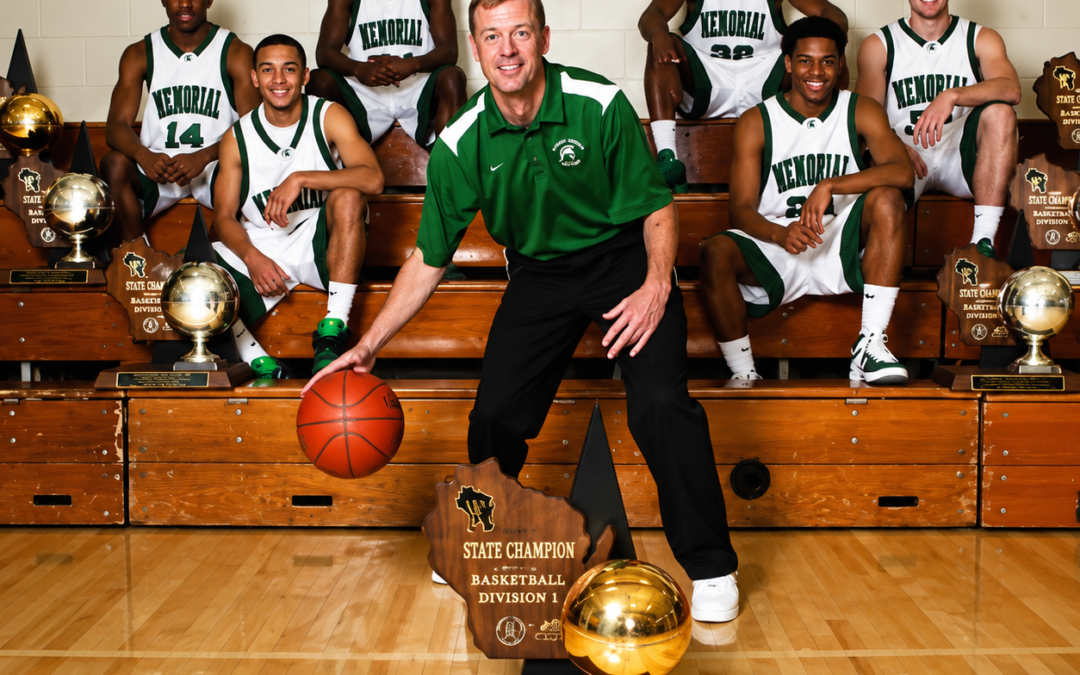
Steve Collins Built Championships And Now Teaches Basketball Coaches Everywhere

Steve Collins Built Championships And Now Teaches Basketball Coaches Everywhere
Steve Collins Built Championships And Now Teaches Basketball Coaches Everywhere

For nearly three decades, Steve Collins built one of Wisconsin high school basketball's most successful programs. 

Now, after stepping away from the sidelines, his impact on basketball may be entering an entirely different stage.

Collins retired following the 2025–26 season after 27 seasons leading the boys basketball program at Vel Phillips Memorial High School in Madison, Wisconsin. 

His career included three state championships, more than 500 victories, 14 consecutive conference championships and induction into the Wisconsin Basketball Coaches Association Hall of Fame.

But the victories tell only part of his story.

Through TeachHoops, Coaching Youth Hoops, podcasts, clinics and educational resources, Collins has taken decades of basketball experience and created ways to teach coaches well beyond Wisconsin.

His next chapter isn't about building one program.

It's about helping coaches build thousands of them.


Why Steve Collins Matters

Sustained success in basketball is difficult.

Winning with one talented group is one accomplishment. 

Creating a system that survives graduating classes, changing personnel, evolving competition and decades of expectations is something entirely different.

Collins demonstrated that kind of longevity at Memorial.

His influence now extends beyond players he coached directly because he has transformed his experience into resources other coaches can study, adapt and implement.


Background & Basketball Journey

Collins' basketball roots run deep in Madison.

He attended Madison East High School, captaining both the basketball and volleyball teams before graduating in 1985. 

He continued his basketball career at Lawrence University, where he became a three-year team captain.

His professional life also combined coaching with education. 

Collins worked as an AP Statistics teacher, an interesting piece of his background considering the organization, analysis and attention to detail required to sustain a successful basketball program.

In 1998, Collins pursued the Memorial head-coaching position.

He wasn't taking over a powerhouse.

Memorial had not reached a regional final since the 1991–92 season. His original objective was relatively modest: build a winning team.

What followed became much bigger.


Career And Accomplishments

Collins transformed Memorial into a Wisconsin basketball power.

His teams captured Wisconsin Division I state championships in 2005, 2009 and 2011 while also producing five state runner-up finishes.

Memorial won 14 consecutive conference championships from 2004 through 2017, a streak described by the Madison school district as a state record.

TeachHoops lists Collins' career head-coaching record at 519–155.

His résumé also includes two State Coach of the Year honors, national tournament success and induction into the Wisconsin Basketball Coaches Association Hall of Fame.

Those accomplishments demonstrate something more important than individual seasons: consistency.


Impact On Basketball

Collins' influence can also be measured through player development.

An earlier CoachTube biography credited his Memorial program with producing 38 collegiate athletes and six professional players.

Developing players for opportunities beyond high school is another layer of his coaching legacy.

But Collins has expanded his influence further through TeachHoops, an educational platform offering drills, practice plans, courses, clinics, documents and additional resources for basketball coaches.

He is also connected with Coaching Youth Hoops, which has stated a mission of positively impacting one million children through basketball by 2032.


Original Analysis

What makes Collins particularly interesting is how he has extended the lifespan of his basketball knowledge.

A coach can accumulate decades of valuable experience, practice concepts, leadership lessons, mistakes, player-development methods and program-building strategies only for much of that knowledge to disappear when the coaching career ends.

Collins chose another route.

He began packaging that knowledge so other coaches could learn from it.

His evolution can almost be described as:

Coach → Program Builder → Educator → Content Creator → Coaching Entrepreneur

That progression makes his story especially relevant in today's basketball environment.


What Makes Steve Collins Different

TeachHoops isn't simply about plays.

Steve Collins' content reaches into leadership, motivation, team building, practice organization, youth development and the everyday challenges coaches encounter.

His podcast catalog has included Coach Unplugged, High School Hoops, The 5 Minute Basketball Coaching Podcast, Coaching Youth Hoops, The Basketball Leadership Podcast and other basketball-focused programs.

That creates influence far beyond one gym.


Supporting Information

Collins retired after Memorial finished as Wisconsin Division I state runner-up during the 2025–26 season.

Former Memorial player and assistant/JV coach Billy Wilson was subsequently selected to lead the program.

That succession provides another indication of Collins' impact: someone who played for him and later worked within the program became part of carrying it forward.


Challenges And Journey

Collins' career is also a reminder that powerhouse programs aren't always inherited.

When he arrived at Memorial, sustained championship success wasn't guaranteed.

It had to be constructed.

The championships eventually became the visible result, but decades of organization, teaching, player development, culture building and consistency formed the foundation.


Al Woods Perspective

What stands out to me about Steve Collins isn't simply the 500-plus victories or the three state championships.

It's what he did with the knowledge accumulated along the way.

Basketball needs experienced people willing to teach the next generation of coaches. 

When successful coaches share what worked, what failed and what they learned over decades, the entire game can benefit.

Collins built winners, developed players and established a championship culture. 

Now he's creating opportunities for other coaches to learn from those experiences.

That's basketball impact extending beyond wins and losses.


What The Basketball Community Can Learn

Great programs aren't created overnight.

They require standards, teaching, consistency, organization and patience.

Collins' career also demonstrates that knowledge becomes more valuable when it's shared.

A coach's influence doesn't necessarily have to end when the final game is coached.

Sometimes that's when the next form of influence begins.


Conclusion

Steve Collins spent 27 seasons building Memorial basketball into a championship program.

Three state titles, more than 500 victories and a remarkable conference championship streak established his coaching résumé.

But his next chapter deserves attention too.

Through TeachHoops, Coaching Youth Hoops and his extensive educational content, Collins is taking lessons accumulated across decades and putting them into the hands of coaches everywhere.

The sideline chapter may have ended.

The teaching hasn't.


Author/Byline

Al Woods | Woods Recruiting

Al Woods is the founder of Woods Recruiting and has been involved in basketball as a player, scout and evaluator for decades. 

Through Woods Recruiting, he covers high school and college basketball, grassroots programs, recruiting, coaches, scouts, trainers and individuals making an impact throughout the game. 

The Movers & Shakers series recognizes people and organizations whose work, leadership and contributions deserve greater attention throughout the basketball community.
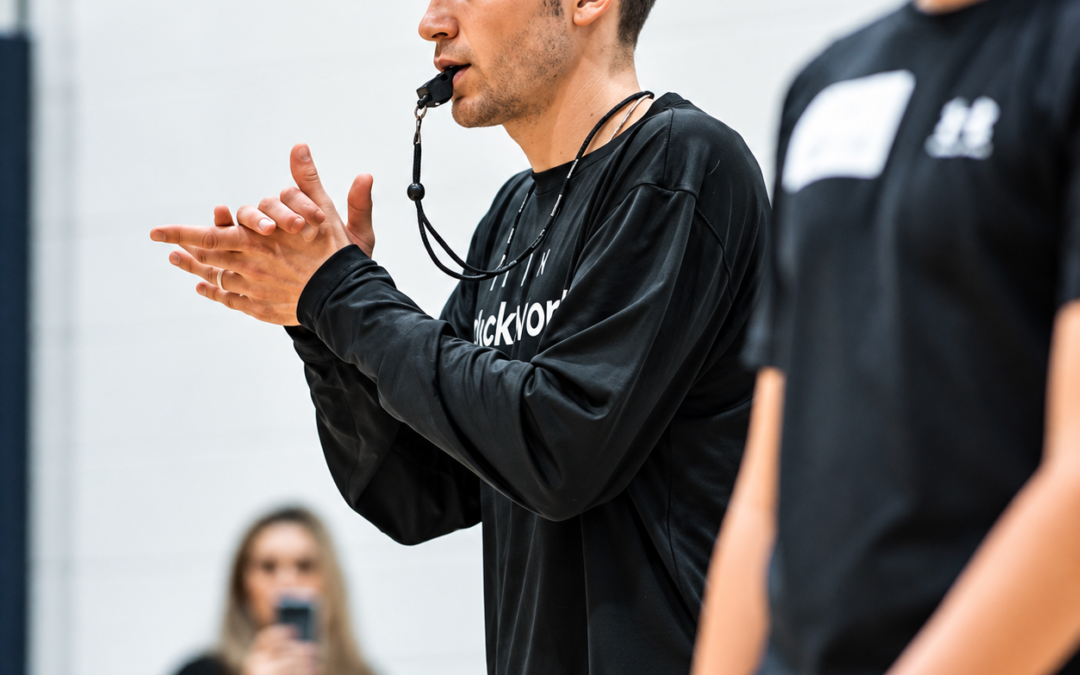
Anthony Pugh Built His Basketball Calling Through Player Development

Anthony Pugh Built His Basketball Calling Through Player Development

Anthony Pugh Built His Basketball Calling Through Player Development

Anthony Pugh’s basketball story changed when he realized his greatest contribution to the game might not come from playing it.

Pugh had reached Division I basketball as a 5-foot-8 walk-on point guard at Robert Morris University. 

The achievement alone represented years of work. 

Yet during his freshman season, something unexpected happened. 

Working with starting point guard Kavon Stewart before and after team activities helped Pugh discover an enthusiasm for player development that eventually became stronger than his desire to continue playing.

After that season, he stepped away from competitive basketball and committed himself to developing others. 

In April 2016, he founded Clockwork Athletics from his college dorm room.

What followed demonstrates how basketball careers can evolve in directions players never anticipate.

Pugh became a player-development coach, entrepreneur, basketball educator and WNBA advanced scout. 

His journey is not simply about training players. It is about recognizing a calling and having enough conviction to pursue it.


Why Anthony Pugh Matters

Basketball development has become an enormous industry. Trainers are everywhere.

What separates Pugh's story is the combination of experiences he brings to his work.

He has been a high-school standout, Division I walk-on, skills developer, business owner and professional basketball scout. 

Clockwork Athletics currently lists advanced-scouting experience with the Connecticut Sun from 2019–2022, Los Angeles Sparks from 2023–2024 and Dallas Wings beginning in 2025.

That scouting experience matters because development should ultimately connect individual skills with what actually happens during competition.


Background & Basketball Journey

Pugh grew up as a coach's son and spent considerable time around basketball from an early age.

At McDonald High School in Ohio, he became a four-year varsity point guard. 

Clockwork Athletics credits him with more than 1,000 career points, more than 400 assists and All-Ohio recognition.

His next opportunity required a different path.

After receiving recruiting interest from Division II and Division III programs, Pugh earned an opportunity to walk on at Robert Morris.

The school's official 2015–16 roster confirms Pugh as a 5-foot-8, 150-pound freshman guard from McDonald High School.

He had reached Division I basketball.

But reaching that level ultimately helped him discover something else.


Career And Accomplishments

During Pugh's freshman season, he developed a relationship with Robert Morris starting point guard Kavon Stewart. 

According to biographical material accompanying Pugh's podcast appearances, the two regularly worked together before and after practices and games.

Those sessions helped Pugh recognize his passion for skill development.

He made the difficult decision to stop playing after his freshman season and dedicate his attention to development. 

Clockwork Athletics was founded on April 20, 2016, while Pugh was still living in his Robert Morris dorm room. 

He later graduated from Robert Morris in May 2019 with a bachelor's degree in sport psychology.

Clockwork has since grown well beyond that dorm-room beginning.

The organization says Pugh has worked with NBA, WNBA and overseas professionals, college athletes, high-school prospects and younger players while also providing team and AAU development.


Impact On Basketball

Pugh's influence extends beyond individual workouts.

He has participated in camps, clinics, speaking engagements, podcasts and basketball education while creating resources for players and coaches.

He also created the Pugh Podcast, which ran from 2019 through 2021 and accumulated 63 episodes focused on helping basketball players and coaches develop.

The combination gives Pugh several ways to influence the game: teaching players directly, educating coaches and athletes through content, and studying basketball through professional advanced scouting.


Original Analysis

The most important part of Pugh's story may be the decision that appeared, at first, to be a step backward.

Walking away from a Division I playing opportunity could easily have been viewed as giving something up.

Instead, Pugh redirected his competitive energy.

That's an important distinction.

Basketball careers aren't always linear. 

Sometimes progress requires recognizing that the role you originally chased isn't where your greatest opportunity exists.

Pugh didn't leave basketball.

He changed his position within basketball.

That decision eventually opened doors that probably weren't visible when he was an undersized freshman guard trying to establish himself at Robert Morris.


What Makes Anthony Pugh Different

There is another element worth examining.

Pugh's professional scouting background gives him an additional perspective on player development.

Training teaches the mechanics of improvement. 

Advanced scouting requires studying personnel, tendencies, actions, matchups and how individual abilities function within team basketball.

When those worlds intersect, development can become less about performing impressive drills and more about preparing players to solve actual basketball problems.

Pugh describes his own approach around detail, relentless work ethic and helping players improve regardless of their starting level.


Supporting Information

Pugh has also embraced technology and digital instruction.

Dr. Dish Basketball highlighted its work with Pugh and Clockwork Athletics in 2022, while his digital development offerings have included structured basketball workouts.

That evolution reflects where modern player development is heading: combining in-person instruction, film, technology, data and remote development opportunities.


Challenges And Journey

Pugh's own playing experience helps explain his emphasis on work.

He has described himself as physically unlike the stereotypical Division I athlete smaller and thinner but credited disciplined work, passion and constant improvement with helping him earn his Robert Morris opportunity.

That background gives his message credibility.

He experienced what it meant to pursue opportunities without possessing ideal physical measurements.


Al Woods Perspective

What stands out to me about Anthony Pugh is not simply that he became a successful player-development coach.

It's that he recognized where his basketball future was heading and acted on it.

A lot of people remain attached to the role they originally imagined for themselves. 

Pugh reached Division I basketball and then discovered that helping someone else improve gave him another kind of purpose.

Starting Clockwork Athletics from a dorm room wasn't the finish line. It was the beginning.

Player development, entrepreneurship, basketball education and professional scouting followed.

His journey is another reminder that making an impact in basketball doesn't require wearing the uniform forever.

Sometimes your biggest contribution begins after you take it off.


What The Basketball Community Can Learn

Pugh's journey offers an important lesson for players, trainers and aspiring basketball professionals.

Don't define your basketball future too narrowly.

Playing is one pathway.

Coaching is another.

Scouting, development, analytics, administration, media and entrepreneurship provide others.

The game needs people who understand basketball and are willing to spend years developing their craft.

The key is recognizing where your abilities, interests and opportunities intersect and then doing the work required to become valuable there.


Conclusion

Anthony Pugh's journey took him from McDonald High School to Robert Morris, from a college dorm room to building Clockwork Athletics, and from developing individual players to studying the professional game as a WNBA advanced scout.

The common thread has been development.

His career demonstrates something young basketball professionals should remember: your original dream can evolve without becoming a lesser dream.

Sometimes changing direction isn't walking away from the game.

Sometimes it's discovering exactly where you belong in it.


Author/Byline

Al Woods | Woods Recruiting

Al Woods is the founder of Woods Recruiting and a longtime basketball scout, evaluator and former player. 

Since launching Woods Recruiting in 1989, Woods has spent decades studying prospects, recruiting, grassroots basketball and the people who influence player development. 

Through scouting reports, recruiting education and the Movers & Shakers series, Woods Recruiting highlights student-athletes, coaches, trainers, scouts and basketball professionals whose work deserves greater attention throughout the basketball community.

Five 2027 Girls Basketball Prospects College Coaches Should Watch

Five 2027 Girls Basketball Prospects College Coaches Should Watch

Five 2027 Girls Basketball Prospects College Coaches Should Watch

The Class of 2027 continues to offer college basketball programs an interesting collection of prospects with size, versatility, academic strength and competitive experience. 

This group features Nyla Black, Kyla Frazier, Sophia Louis-Pierre, Zoe Coleman and Maci Pringle five players with different skill sets and developmental paths. 

Several have competed in strong grassroots environments, while the group collectively offers positional size ranging from 5-foot-9 guards to 6-foot-1 multidimensional prospects. 

Academically, multiple players report GPAs of 3.77 or higher, an important consideration throughout the recruiting process. 

Zoe Coleman has already made her college decision with a commitment to Miami, while the others remain prospects worth evaluating. 

For college coaches, the objective is simple: continue watching their development, film, production and progression as they move toward the next level.


Nyla Black 5'9" Combo Guard, Class of 2027

Nyla Black is a 5-foot-9 Class of 2027 combo guard from Horizon Christian Academy in Georgia who competes with Elevate Elite 17U on the 3SSB circuit. 

Black's size provides flexibility in the backcourt, where she can potentially contribute at multiple guard positions. 

Her reported 3.77 GPA adds another important dimension to her recruiting profile and demonstrates strong academic standing. 

Competing within the Elevate Elite grassroots program gives Black opportunities to test herself against quality competition while continuing to develop her overall game. 

College programs evaluating 2027 guards should study her ability to handle pressure, create offense, defend multiple perimeter positions and make decisions with the basketball.

X: @NylaBlack2027


Kyla Frazier 5'9" Guard, Class Of 2027

Kyla Frazier is a 5-foot-9 Class of 2027 guard competing with the NW Greyhounds 17U 3SSB program. 

Frazier's combination of backcourt size and outstanding academics immediately gives college programs several areas to investigate. 

Her reported 4.0 GPA is a significant part of her overall profile and could expand the range of schools capable of recruiting her. 

On the basketball side, continued evaluation should focus on her ball handling, perimeter shooting, decision-making, defensive versatility and ability to produce against high-level competition. 

Playing on the 3SSB circuit provides an important evaluation environment. 

As her development continues, coaches should examine how effectively Frazier translates her physical tools and guard skills into consistent production.

X: @KylaFrazier8


Sophia Louis-Pierre 6'1" Guard/Forward, Class Of 2027

Sophia Louis-Pierre presents college coaches with an intriguing combination of size and positional versatility. 

The 6-foot-1 Class of 2027 guard/forward attends The Galloway School in Georgia and competes with Adidas Team Elite Hubbard 17U. 

Her ability to operate as a guard or forward creates multiple developmental possibilities at the college level. Louis-Pierre also reports a 3.8 GPA, strengthening an already interesting overall profile. 

At 6-foot-1, coaches should closely evaluate her perimeter skill development, shooting consistency, defensive mobility, rebounding, transition ability and capacity to attack mismatches. 

Her size becomes particularly valuable if she can consistently handle guard responsibilities while defending multiple positions. 

Louis-Pierre is a prospect whose versatility deserves continued evaluation.

X: @sophdogg2027


Zoe Coleman 5'11" Guard, Class of 2027

Zoe Coleman is a 5-foot-11 Class of 2027 guard from Pickerington Central High School in Ohio who competes with Phenom United 17U on the 3SSB circuit. 

Coleman has already reached an important recruiting milestone with her commitment to Miami.

Her size in the backcourt provides intriguing possibilities because bigger guards can influence games through scoring, rebounding, defensive versatility and their ability to see over smaller defenders. 

Competing for Pickerington Central and within the 3SSB environment has provided Coleman opportunities against quality competition. 

Her continued development before entering college will be important, particularly in areas such as perimeter consistency, decision-making, strength, defensive versatility and creating offense against athletic defenders.

X: @Zoecoleman_10


Maci Pringle 6'1" Class Of 2027 Prospect

Maci Pringle is a 6-foot-1 Class of 2027 prospect from Flower Mound High School in Texas whose multi-sport background adds another interesting component to her athletic profile. 

Her size, length and reported athleticism provide a foundation that could translate into several roles on the basketball court. 

Pringle's developing perimeter shooting is especially important because expanding her range could make her increasingly difficult to defend. 

College coaches should continue evaluating her position, versatility, movement, rebounding, defensive potential and ability to consistently impact possessions away from the basketball. 

Multi-sport athletes can bring valuable coordination, competitiveness and physical development to basketball. 

Continued skill refinement could help Pringle define her eventual college position and overall recruiting projection.

X: @MaciPringle


Al Woods Evaluation

This group demonstrates why college coaches should avoid evaluating prospects through one narrow lens. 

There are different developmental possibilities throughout these five players. 

Black and Frazier bring 5-foot-9 size to the backcourt along with strong reported academics. 

Louis-Pierre offers the positional flexibility of a 6-foot-1 guard/forward. 

Coleman is a 5-foot-11 guard who has already earned a commitment to Miami, while Pringle provides 6-foot-1 size and a multi-sport athletic background. 

The next stage is about development and consistency. 

Coaches should continue evaluating film, live competition, academics, physical development and how each player's skills translate against stronger opponents. 

Recruiting isn't simply about identifying talent. It's about determining how that talent projects into a specific college system.


Final Evaluation

The Class of 2027 recruiting cycle continues moving forward, but evaluation should never stop. 

Nyla Black, Kyla Frazier, Sophia Louis-Pierre, Zoe Coleman and Maci Pringle each present different qualities worth following. 

Size, academics, versatility, grassroots competition and continued skill development are recurring themes throughout this group. 

For uncommitted prospects, every competitive opportunity provides another chance to strengthen their recruiting profile. 

For college coaches, continued evaluation remains essential. 

Development rarely follows a straight line, and the player you evaluate today may look considerably different several months from now.

Rasheen Johnson’s Growing Influence Across Virginia Girls Basketball Recruiting

Rasheen Johnson’s Growing Influence Across Virginia Girls Basketball Recruiting

Rasheen Johnson’s Growing Influence Across Virginia Girls Basketball

Rasheen Johnson has developed a basketball footprint that extends across several important areas of Virginia girls basketball.

Scouting. Coaching. Grassroots basketball. Player evaluation. Showcases. Recruiting exposure.

Instead of operating from only one position within the basketball community, Johnson has gained experience seeing the game from several different perspectives. 

His work with Prep Girls Hoops, TPLS Christian Academy, FBC Havoc and the Elite 50/50 platform has placed him around players at different stages of their development.

Today, Prep Girls Hoops identifies Johnson as its Virginia Lead Scout, and his published evaluations demonstrate consistent involvement identifying and evaluating prospects throughout the state.

That combination makes Johnson an interesting figure within the Virginia basketball landscape.

His story is ultimately about more than scouting players.

It is about being positioned where evaluation, development, exposure and opportunity intersect.


Why Rasheen Johnson Matters

Girls basketball continues to grow, but talented players still need knowledgeable basketball people willing to watch them, evaluate them and bring attention to their development.

Johnson operates directly within that process.

His Prep Girls Hoops coverage includes rankings updates, player evaluations and prospect identification. 

His evaluations regularly address basketball-specific qualities including positional versatility, shooting, defensive ability, athleticism, decision-making and long-term development.

That matters because scouting should be more than repeating statistics.

Evaluation requires projecting what a player could eventually become.


Background & Basketball Journey

Johnson is based in Virginia and has built his basketball experience primarily around the girls game.

His background has included coaching and grassroots involvement alongside scouting and player evaluation. 

Prep Girls Hoops currently lists him as a Lead Scout, while his work connected to TPLS Christian Academy and FBC Havoc has provided another perspective on player development.

The FBC Havoc program is based in Richmond and includes teams across multiple age groups. 

Prep Girls Hoops' program page also identifies Johnson as a club coach within the organization.

Those overlapping experiences provide something valuable: perspective.

Johnson understands what prospects look like during evaluations, but he also understands what player development looks like from inside a basketball program.


Career And Accomplishments

One of the strongest components of Johnson's basketball résumé is the variety of environments in which he has worked.

His involvement includes Prep Girls Hoops Virginia, TPLS Christian Academy, FBC Havoc and the Elite 50/50 platform.

The Elite 50/50 Girls Basketball Camp has created another environment for younger prospects to compete and receive evaluation. 

Johnson's coverage of the event has included players from several graduating classes, including prospects still years away from college basketball.

His Prep Girls Hoops work also extends beyond event recaps.

In January 2026, Johnson published an evaluation of Virginia's unsigned 2026 seniors, identifying prospects he believed college programs should continue evaluating.

That is where scouting can have a meaningful impact.


Impact On Basketball

Johnson's influence comes primarily through visibility and evaluation.

The basketball world naturally gravitates toward nationally ranked prospects, major shoe-circuit programs and players already holding scholarship offers.

But hundreds of legitimate prospects exist outside that spotlight.

Evaluators willing to consistently watch basketball can help broaden the conversation.

Johnson's published work includes established recruits, developing prospects and younger players whose recruiting stories are still beginning. 

His evaluations show attention to both immediate production and developmental upside.


Original Analysis

What stands out about Johnson is the connection between his different basketball roles.

A scout sees talent.

A coach develops talent.

A grassroots organizer creates competitive opportunities.

A showcase creates visibility.

Someone who has experience across those areas can potentially understand the recruiting process from a wider perspective than someone operating from only one lane.

That doesn't mean every evaluation will prove correct. Scouting is projection, and young players change dramatically.

But repeated exposure to players, programs and competitive environments creates valuable context.


What Makes Rasheen Johnson Different

Johnson's basketball work isn't restricted to standing on the sideline evaluating prospects.

He has operated within programs.

He has worked around grassroots basketball.

He has evaluated players.

He has contributed to showcases.

And he has published scouting analysis.

That combination provides a broader view of how prospects move through the basketball ecosystem.


Supporting Information

Johnson's recent Prep Girls Hoops evaluations demonstrate the range of qualities he considers when assessing prospects.

His reports discuss shooting range, defensive pressure, positional versatility, length, athleticism, rebounding, decision-making and the ability to create opportunities for teammates.

Those details provide evidence of an evaluator looking beyond points per game.


Challenges And Journey

Independent evaluation is difficult.

There are thousands of prospects, constantly changing rankings and enormous differences in competition.

Evaluators must also separate reputation from actual performance.

That requires repeatedly watching players and being willing to adjust previous assessments as development occurs.

Johnson's continued coverage of multiple graduating classes reflects that ongoing process.


Al Woods Perspective

What catches my attention about Rasheen Johnson is his willingness to work across different areas of girls basketball.

Basketball needs people who are willing to watch players before everyone knows their names.

The real value of scouting is not simply identifying the obvious prospect. It is recognizing development, documenting progress and helping deserving players become part of the recruiting conversation.

Johnson's combination of coaching, grassroots involvement and scouting gives him an interesting position within Virginia girls basketball.


What The Basketball Community Can Learn

There is an important lesson in Johnson's journey.

You don't necessarily have to choose one basketball lane.

Coaching can improve scouting.

Scouting can improve coaching.

Grassroots basketball can expand relationships.

Showcases can create opportunities.

When those experiences work together, they can create a deeper understanding of players and the recruiting process.


Conclusion

Rasheen Johnson represents an important part of today's girls basketball ecosystem.

His work connects player development, grassroots competition, scouting and exposure.

As Virginia continues producing college basketball prospects, evaluators willing to consistently identify and document emerging talent will remain valuable.

Johnson has positioned himself directly inside that process.

And sometimes the people making the biggest difference in basketball aren't necessarily the people receiving the most attention.

They're the people consistently doing the work.

Author / Byline

Al Woods is the founder of Woods Recruiting, an independent basketball scouting and media platform covering high school basketball, grassroots competition, recruiting, player development and the people helping shape the game. 

A former high school, college and professional basketball player, Woods brings decades of basketball experience to his evaluations and editorial coverage. 

Through Woods Recruiting, he highlights emerging prospects while recognizing coaches, scouts, trainers, organizations and basketball influencers making meaningful contributions throughout the basketball community.
Tyler Coston Is Changing How Basketball Coaches Teach The Game

Tyler Coston Is Changing How Basketball Coaches Teach The Game

Tyler Coston Is Challenging How Basketball Coaches Teach The Game

Tyler Coston has traveled a basketball path that stretches from championship player to college coach, player-development specialist, basketball educator, system creator and entrepreneur. 

Today, as founder and CEO of SAVI Coaching, Coston is attempting to influence something deeper than which offense or defense coaches run. 

His work challenges coaches to reconsider how basketball itself should be taught.

His journey includes playing at Lynden Christian High School, Trinity Western University and the University of Alberta, coaching at the college level, experiencing the NCAA Tournament at Portland State and spending approximately 13 years in leadership roles with PGC Basketball.

Those experiences eventually helped shape SAVI Coaching and concepts including LockLeft Defense, Race, Drive & Space offense and the SAVI Shooting System.

The common thread is teaching players to understand basketball rather than simply memorize instructions.


Why Tyler Coston Matters

Basketball is filled with systems, drills, plays and terminology. Coston's work focuses on simplifying those elements so players can recognize situations, process information and make decisions.

That distinction matters.

A coach can tell players exactly where to stand and what actions to execute. 

Developing players capable of understanding why those actions work is a different challenge.

Coston has increasingly built his career around that challenge.


Background & Basketball Journey

Coston played at Lynden Christian High School in Washington, where he reportedly helped lead the program to a Washington state championship in 1999 and earned first-team All-State recognition.

He continued his career at Trinity Western University as a 6-foot-2 guard and earned Canada West All-Rookie Team honors.

Coston later transferred to the University of Alberta and was part of a Golden Bears program that captured Canada West gold and reached the Canadian national tournament in 2004.

Playing the game at multiple competitive levels gave him the foundation for what eventually became a career devoted to teaching it.


Career And Accomplishments

Coston transitioned into coaching after his playing career.

From 2005 through 2007, he coached women's basketball at Trinity Western University while also developing players through a skills-development program.

In 2007, he joined Portland State as an NCAA Division I assistant coach.

Portland State finished 23-8 during his first season, captured the Big Sky Conference Tournament championship and advanced to the NCAA Tournament.

His career then moved heavily toward basketball education.

Coston spent approximately 13 years with PGC Basketball, eventually serving in leadership positions including Director of Basketball Development and PGC Master Director.

That experience placed him in an environment centered not only on developing basketball players but also on developing the people responsible for teaching them.


Impact On Basketball

Coston eventually created SAVI Performance, which developed into SAVI Coaching.

The organization now provides coaching education, clinics, consulting, basketball systems, courses, film breakdowns and live coaching instruction.

Among Coston's best-known concepts are:

  • LockLeft Defense
  • Race & Space Offense
  • Race, Drive & Space
  • SAVI Shooting System
  • Coach development
  • Program consulting
  • Practice planning

These concepts demonstrate something larger than individual basketball products.

Coston is building a comprehensive teaching methodology.


Original Analysis

The most interesting part of Coston's work is not necessarily whether every coach agrees with every concept.

Basketball needs coaches willing to question assumptions.

Many traditional basketball concepts survive because one generation of coaches teaches them to the next. Coston's approach asks another question:

Does the teaching method actually help players understand the game?

That question is powerful.

Basketball increasingly requires players to process information quickly. Defenses change. 

Advantages disappear. Spacing shifts. Players must recognize situations almost instantly.

Memorization alone cannot solve every basketball problem.

Decision-making can.


What Makes Tyler Coston Different

LockLeft Defense provides an excellent example.

The concept is commonly associated with influencing ball handlers toward their left side, recognizing that many players are right-hand dominant.

But the philosophy extends beyond simply forcing someone left.

The larger objective involves controlling space, keeping the basketball on one side of the floor, establishing help responsibilities and making it more difficult for offenses to comfortably reverse the basketball.

His offensive philosophy follows similar thinking.

Race, Drive & Space emphasizes tempo, spacing, advantage creation and decision-making rather than depending entirely on predetermined movements.

The goal becomes teaching athletes how to play, not merely teaching them how to execute plays.


Supporting Information

Coston's shooting philosophy provides another example of his willingness to challenge conventional thinking.

Through the SAVI Shooting System, he has questioned traditional coaching cues involving foot alignment, dipping the basketball, leg usage and follow-through.

His philosophy can be summarized by one of his most recognizable teaching ideas:

Don't simply fix a player's shot. Help discover that player's shot.

That approach emphasizes individual development rather than forcing every athlete into precisely the same mechanical model.


Challenges And Journey

Moving from player to coach to basketball educator requires constant evolution.

Coston's career has crossed high school basketball, Canadian university basketball, NCAA Division I coaching, player development, coaching education and entrepreneurship.

Building SAVI also meant moving beyond established organizations and creating his own basketball platform.

Today, SAVI's philosophy extends beyond X's and O's through four foundational ideas:

S — Simplicity wins
A — Adversity strengthens
V — Victory is defined
I — Identity commits

Together, they demonstrate Coston's attempt to connect basketball strategy, culture, development and leadership.


Al Woods Perspective

What stands out to me about Tyler Coston is the progression.

He didn't wake up one morning and decide to become a basketball expert on the internet. 

His ideas were developed through years of playing, coaching, teaching and working directly with athletes and coaches.

That's important.

Basketball continues to evolve, and coaches must evolve with it.

We should never become so comfortable with the way basketball has traditionally been taught that we stop asking whether there's a better way.

Coston appears willing to keep asking those questions.

You don't have to agree with every system or teaching philosophy to appreciate someone challenging basketball people to think more deeply about player development.


What The Basketball Community Can Learn

The biggest lesson from Coston's journey may be simple:

Teach understanding, not dependency.

Players eventually have to make decisions without coaches standing beside them.

The best development should prepare them for those moments.

Coaches can provide structure, principles and preparation, but ultimately players must recognize situations and respond.

That makes basketball intelligence something that can be deliberately developed rather than merely hoped for.


Conclusion

Tyler Coston's basketball journey has evolved from player to college coach, educator, system creator and founder of SAVI Coaching.

LockLeft Defense, Race, Drive & Space and the SAVI Shooting System are individual pieces of that journey.

The bigger story is his teaching philosophy.

Coston is challenging coaches to simplify basketball, develop decision-makers and reconsider long-standing assumptions about how the game should be taught.

That willingness to question, teach and innovate makes Tyler Coston a compelling addition to the Woods Recruiting Movers & Shakers series.


Author/Byline

Al Woods Woods Recruiting

Al Woods is the founder of Woods Recruiting, an independent basketball scouting, recruiting and media platform. 

Al Woods has been involved in basketball for decades as a player, scout and evaluator, with his scouting work dating to 1989. 

Through Woods Recruiting, he covers high school and college basketball, grassroots programs, recruiting, coaches, trainers, scouts and influential basketball figures while providing independent evaluations and educational information designed to help athletes and families better understand the recruiting process.