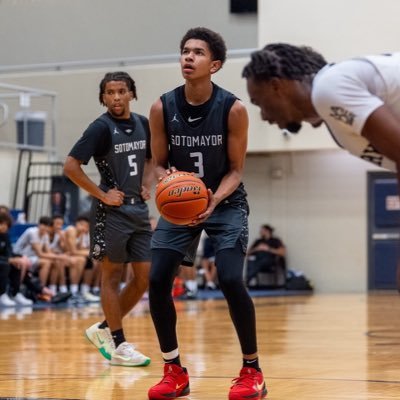
Justin McBryde 2027 Shooting Guard

Justin McBryde 2027 Shooting Guard

Justin McBryde 2027 Basketball Scouting Report

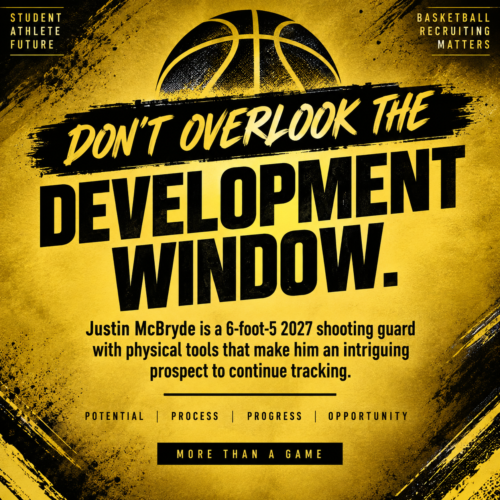
Justin McBryde is a 6-foot-5, 185-pound 2027 shooting guard attending Sotomayor High School who brings intriguing size and positional potential to the boys basketball recruiting landscape.

McBryde also competes with SA Future on the grassroots circuit and carries a reported 3.6 GPA, giving college programs an important combination of basketball potential and academic credibility.

At 6-foot-5, McBryde possesses the type of size that immediately creates possibilities at the shooting guard position. 

Bigger perimeter players can create matchup problems because they have the physical dimensions to shoot over smaller defenders, attack mismatches and potentially defend multiple positions. 

Continued development will determine how effectively McBryde turns those physical tools into production.

His progression should center on expanding his offensive versatility, strengthening his ball-handling against pressure and becoming increasingly consistent as a perimeter threat. 

Defensively, his length gives him tools that can become valuable against opposing guards and wings.

McBryde remains a developing 2027 prospect, meaning his evaluation should continue as his game, body and overall production mature. 

His combination of size, academics and positional versatility makes him a player college programs should continue tracking.

Player Overview

McBryde's most intriguing characteristic is his combination of shooting-guard size and developmental upside. Standing 6-foot-5 gives him dimensions that cannot be taught. The next step is turning those dimensions into dependable production on both ends.

His remaining high school and grassroots basketball development will be important. Improvement as a shooter, creator, defender and decision-maker could significantly strengthen his overall recruiting profile.


Offensive Evaluation

Justin uses excellent positional size, shooting potential, length and versatility to create favorable offensive matchups consistently.


Defensive Evaluation

Length and size provide Justin tools to contest perimeter shots and defend multiple backcourt matchups effectively.


Basketball IQ

Justin demonstrates developing court awareness, understands spacing and continues improving reads within structured offensive situations consistently.


Athleticism/Physical Tools

At 6-foot-5 and 185 pounds, McBryde already owns attractive physical dimensions for a high school shooting guard. His length can become especially valuable defensively and around the basket.

Continued strength development should help him absorb contact, defend stronger opponents and become more effective attacking through traffic. Maintaining mobility while adding functional strength will be important.


Intangibles

Justin combines academic responsibility, positional versatility and developmental upside while continuing to build his basketball identity.


Areas For Improvement

Continue developing ball-handling, physical strength, shooting consistency and creation skills against aggressive high-level defensive pressure.


College Projection

McBryde should be evaluated as a developing 2027 perimeter prospect rather than prematurely attached to a specific college level. 

His 6-foot-5 frame at shooting guard provides a foundation, but future projection will depend heavily on skill development, production, competition level and continued physical growth.

College coaches should monitor how his perimeter shooting, ball-handling, defensive versatility and decision-making progress through the remainder of his high school career.


Al Woods Evaluation

The first thing that stands out about Justin McBryde is the size. A 6-foot-5 shooting guard immediately gives coaches something interesting to evaluate.

But size alone doesn't determine recruiting level. The question is what McBryde eventually does with it.

Can he consistently make perimeter shots? Can he handle pressure? Can he attack closeouts? Can he defend multiple positions? Can he make good decisions with the basketball?

Those areas will ultimately shape his recruiting trajectory. 

McBryde has a physical foundation worth following, and continued development could make his evaluation increasingly interesting.


Final Evaluation

Justin McBryde is an intriguing 2027 prospect whose 6-foot-5 frame gives him excellent size at shooting guard. 

His combination of length, academic standing and developing perimeter abilities provides a foundation worth monitoring. 

Continued improvement as a shooter, ball-handler, defender and physical finisher will strengthen his overall profile. 

McBryde has time to expand his game, and his progression with Sotomayor High School and SA Future should remain important for college coaches to track closely.

Kelechi Onuegbu 2028 Girls Basketball Scouting Report

Kelechi Onuegbu 2028 Girls Basketball Scouting Report

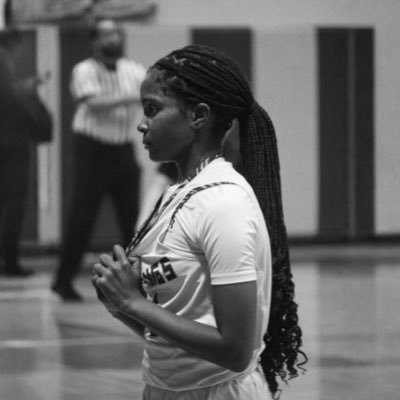
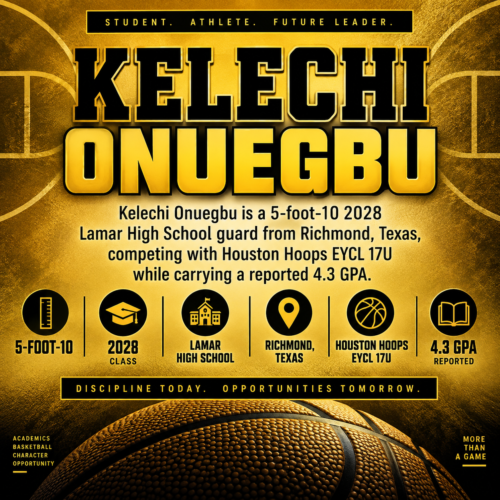
Kelechi Onuegbu, a 5-foot-10 guard from Lamar High School in the Class of 2028, is a Texas girls basketball prospect whose combination of size, academics, and competitive grassroots experience deserves continued evaluation.

Based in Richmond, Texas, Onuegbu also competes with Houston Hoops EYCL 17U, giving her opportunities to develop against quality competition while building her recruiting profile.

At 5-foot-10, Onuegbu possesses useful positional size in the backcourt. 

Her physical profile provides potential versatility as she continues developing her ball handling, shooting, decision-making, defensive consistency, and overall guard skills. 

Playing at the 17U grassroots level while still belonging to the 2028 graduating class also gives college programs an important developmental context when evaluating her progression.

Academically, Onuegbu's reported 4.3 GPA immediately strengthens her overall profile. 

Strong academic performance can expand recruiting possibilities and demonstrates an ability to handle responsibilities away from basketball.

The next several seasons will be important. 

Continued skill development, quality film, updated statistics, academic information, and consistent performances against strong competition will help provide college coaches with a clearer picture of Onuegbu's long-term potential and appropriate collegiate level.

Player Overview

Onuegbu should be evaluated as a developing 2028 guard with size, academic strength, and valuable grassroots experience. 

Her 5-foot-10 frame gives her an intriguing foundation for backcourt versatility, while competing with Houston Hoops EYCL 17U provides another environment for development and exposure.

Because she remains early in her high school career, projection should focus heavily on progression. 

Continued improvement as a shooter, creator, defender, decision-maker, and ball handler will ultimately determine how her recruiting profile develops.


Offensive Skill Evaluation

Possesses valuable guard size while continuing to develop shooting, ball handling, creation, finishing, and consistency offensively.


Defensive Evaluation

Her 5-foot-10 frame provides positional versatility and potential for defending multiple perimeter assignments with development.


Basketball IQ

Continued experience against quality competition should strengthen her reads, decision-making, positioning, pace, and overall awareness.


Athleticism/Physical Tools

At 5-foot-10, Onuegbu brings attractive size to the guard position. That physical profile can become increasingly valuable if accompanied by continued improvement in strength, lateral movement, explosiveness, balance, and conditioning. Her size potentially allows her to operate across multiple backcourt roles rather than being restricted to one position.


Intangibles

Strong academics, competitive experience, and playing 17U basketball demonstrate encouraging qualities within her developing prospect profile.


Areas For Improvement

Continue developing shooting consistency, tighter ball handling, physical strength, finishing, defensive technique, and decision-making under pressure.


College Projection

Onuegbu remains a developing Class of 2028 prospect, making definitive college-level projections premature. 

Her combination of backcourt size, strong academics, and grassroots experience provides a foundation worth monitoring.

The key will be measurable development over the next several seasons. 

College coaches should continue evaluating her progression through full-game film, live competition, updated statistics, academic information, and expanded skill development.


Al Woods Evaluation

What stands out initially about Kelechi Onuegbu's profile is the combination of size, academics, and opportunity. 

A 5-foot-10 guard carrying a reported 4.3 GPA and competing at the 17U grassroots level as a 2028 prospect gives evaluators several reasons to continue tracking her.

But recruiting evaluation must remain about development rather than labels. 

The question is where her game goes next. 

If Onuegbu continues strengthening her perimeter skills, decision-making, defensive versatility, physical tools, and consistency, her recruiting profile can become increasingly interesting as she moves through high school.


Final Evaluation

Kelechi Onuegbu is a 2028 girls basketball guard whose 5-foot-10 size, strong academics, and grassroots experience provide an intriguing developmental foundation. 

Competing for Lamar High School and Houston Hoops EYCL 17U should provide valuable opportunities to strengthen her game against quality competition. 

Continued development as a shooter, ball handler, defender, and decision-maker will be important. 

Her reported 4.3 GPA adds another significant dimension to a prospect profile college programs should continue monitoring closely.

Sophia Okeefe 2027 Girls Basketball Scouting Report

Sophia Okeefe 2027 Girls Basketball Scouting Report

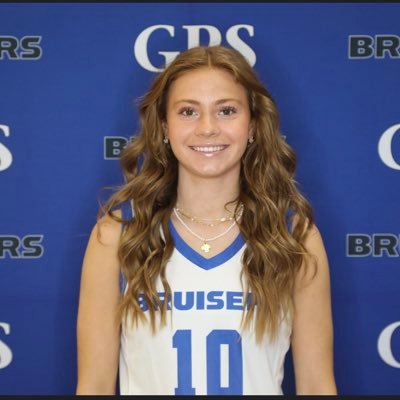
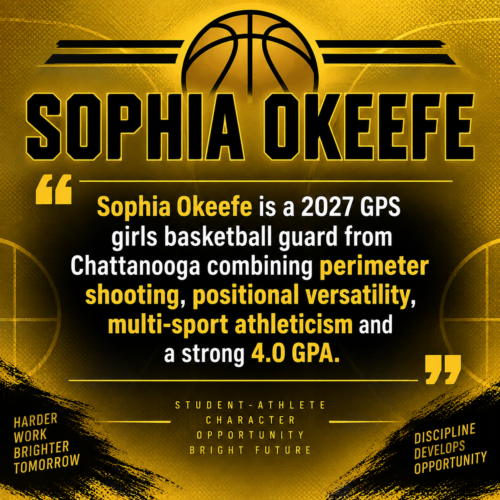
Sophia Okeefe, a 2027 guard from Girls Preparatory School in Chattanooga, Tennessee, is a 5'7" girls basketball prospect whose athletic background, perimeter ability and academic achievement create an intriguing overall profile.

Capable of operating at shooting guard or handling responsibilities in the backcourt, Okeefe provides positional versatility while continuing to develop her complete game.

Her ability to stretch defenses from the perimeter is an important component of her offensive value. 

Okeefe demonstrated that shooting ability by scoring 13 points and connecting on three three-pointers in a GPS victory over Baylor during the 2024-25 season. 

Beyond basketball, her participation in volleyball and track and field provides additional evidence of her competitive athletic background.

Academically, Okeefe carries a reported 4.0 GPA, an important part of her recruiting profile that could expand her potential college opportunities.

The next stage of her development will be about building consistency, expanding her backcourt skill set and demonstrating through film and competition that she can impact games in multiple ways. 

Okeefe has several foundational pieces already in place as she continues through the recruiting process.

Player Overview

Okeefe presents an interesting combination of perimeter shooting, guard versatility, academics and multi-sport experience. Her basketball profile should continue developing as she gains experience and establishes greater consistency against quality competition.


Offensive Skill Evaluation

Perimeter shooting, guard versatility and developing ball skills provide Okeefe multiple opportunities within offensive systems.


Defensive Evaluation

Okeefe's athletic background provides tools for developing dependable perimeter defense, positioning, toughness and consistent effort.


Basketball IQ

Okeefe shows developing understanding of spacing, positioning, offensive responsibilities and making productive decisions within structure.


Athleticism / Physical Tools

At 5'7", Okeefe brings guard size complemented by a multi-sport background in volleyball and track. Her participation across multiple sports provides a foundation of coordination, movement, competitiveness and overall athletic development.


Intangibles

Strong academics, multi-sport participation and continued development demonstrate discipline, competitiveness, commitment and valuable overall versatility.


Areas For Improvement

Continue strengthening ball handling, finishing, defensive consistency, playmaking and creating offense effectively against increased pressure situations.


College Projection

Okeefe's college projection remains developing. Her combination of academics, perimeter shooting and positional versatility creates a foundation worth following, but continued film evaluation, statistical production and development will ultimately determine the appropriate collegiate level.


Al Woods Evaluation

Sophia Okeefe is the type of prospect who should continue building her recruiting résumé rather than relying on one strength. 

Shooting matters, but college coaches will want to see complete possessions: defending, handling pressure, making decisions, creating opportunities, communicating and competing.

Her 4.0 GPA is an important asset. 

Her multi-sport background adds another dimension. 

Now the basketball film needs to continually demonstrate how those qualities translate into winning possessions.


Final Evaluation

Sophia Okeefe is a developing 2027 girls basketball prospect with perimeter shooting ability, positional versatility, strong academics and an extensive multi-sport background. 

Her combination of basketball, volleyball and track participation adds another dimension to her overall athletic profile. 

Continued improvement as a ball handler, defender, playmaker and finisher could strengthen her college recruiting opportunities. 

Okeefe should continue producing quality film, developing consistency and demonstrating that she can positively impact games beyond scoring the basketball.


Author / Byline

Scouting Report by Al Woods | Woods Recruiting

Al Woods brings decades of basketball experience as a former high school, college and professional player and longtime independent basketball scout. 

Woods Recruiting evaluates student-athletes while providing college coaches, players and families with independent scouting information and recruiting education.

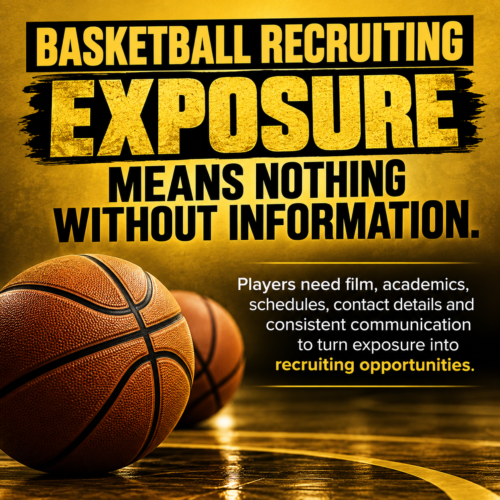
Basketball Recruiting Exposure Means Nothing Without Information

Basketball Recruiting Exposure Means Nothing Without Information

Basketball Recruiting Exposure Means Nothing Without Information

By Al Woods | Woods Recruiting Independent Basketball Scout, Recruiting Educator & Founder of Woods Recruiting

Imagine this.

Your parents spend thousands of dollars during the spring and summer chasing basketball exposure.

AAU fees. Tournament fees. Showcase fees. Hotels. Gas. Flights. Rental cars. Food. Admission tickets. Parking. Uniforms. Shoes. Training. Everything adds up.

Then you finally get to the big event.

College coaches are sitting along the baseline.

You play great.

You defend. You score. You rebound. You make plays. Your team wins. You do everything everybody told you that you needed to do.

Then the tournament ends.

Nothing.

Another tournament comes and goes.

Nothing.

Summer ends.

Still nothing.

Not one college coach calls. No direct messages. No emails. No recruiting conversations.

Damn!!!!!

Yes, damn is the appropriate word.

Damn, because your family spent serious money.

Damn, because you traveled all over the place.

Damn, because everybody sacrificed weekends, vacations, money, sleep and time.

And damn, because somewhere along the way you were convinced that simply being in the building meant you were getting recruited.

It doesn't.


Exposure Is Not Recruiting

This is one of the biggest misunderstandings in grassroots basketball.

Exposure and recruiting are not the same thing.

Exposure means someone had an opportunity to see you.

Recruiting means a college program has identified you, evaluated you, gathered information about you and decided you may fit what they're looking for.

Those are completely different situations.

You can play in front of 100 college coaches and still walk out of the gym virtually unknown.

Think about that.

There could be hundreds or even thousands of prospects moving through a major event. 

Coaches are bouncing from court to court, evaluating specific players, following recruiting lists, talking with other coaches and trying to maximize limited time.

Why should they remember you?

That's the question.

And don't tell me, "Because I can play."

So can everybody else.

Welcome to competitive basketball.


Information Creates Opportunity

The biggest mistake families make is believing talent automatically creates recruiting attention.

It doesn't.

College coaches need information.

They need to know:

  • Your full legal name
  • Your graduation class
  • Your high school
  • Your AAU program
  • Your current height
  • Your academic information
  • Your playing position
  • Your video and film
  • Your contact information
  • Your upcoming schedule

Make it ridiculously easy for a college coach to investigate you.

If a coach sees you play well and searches your name five minutes later, what happens?

Can they find you?

Can they find video?

Can they determine your graduation year?

Can they find your high school?

Can they figure out your AAU program?

Can they see additional games?

Can they determine whether you might be academically qualified?

Or does your social media page contain three selfies, two inspirational quotes, a picture of your shoes and absolutely nothing useful about basketball?

Come on.

You're trying to get recruited.

Act like it.


Stop Showing Up Randomly

Before you attend an event, college programs you're genuinely interested in should know where you're going to be.

Send your schedule.

Send your team name.

Send your jersey number.

Send your graduation year.

Send your court assignments when they're available.

Send your video.

Then compete.

During the tournament, keep your information updated when appropriate.

Afterward, follow up.

Don't assume somebody else is going to do everything for you.

Your AAU coach has other players.

Your high school coach has an entire team.

Tournament organizers have hundreds of teams.

Scouting services have hundreds or thousands of prospects.

Eventually, somebody in your household needs to take responsibility for managing your recruiting information.


Recruiting Requires Teamwork

I understand student-athletes are busy.

School.

Practice.

Training.

Games.

Homework.

Travel.

Family responsibilities.

That's why recruiting should become a family operation.

Sit around the dining room table and develop a strategy.

Not dreams.

Not wishes.

Not fantasies about Duke, UConn, South Carolina, Kentucky or whichever powerhouse you watched on television last weekend.

A real strategy.

Who handles video?

Who updates social media?

Who tracks communication?

Who researches schools?

Who maintains schedules?

Who follows up after events?

Who keeps academic information organized?

Someone needs responsibility for every important piece.

Because this process is too important to operate randomly.


This Is A Battle

Recruiting is competitive.

Call it whatever you want.

I call it a battle for opportunity.

Thousands of talented basketball players want scholarships.

College programs have limited roster spots.

That means talent alone cannot be your strategy.

You need talent.

You need academics.

You need development.

You need film.

You need communication.

You need information.

And you need persistence.

Recruiting happens when people know who you are.

If they don't know you exist, they cannot recruit you.

You could be unbelievably talented and still be invisible.

That's the brutal part.

Being good enough and being known are two completely different things.


Your Social Media Matters

Your social media account should operate like a living recruiting résumé.

A coach shouldn't need a private investigator to figure out who you are.

Your profile should immediately communicate the basics.

Then your timeline should reinforce the story.

Game clips.

Full-game film.

Statistics.

Schedules.

Academic accomplishments.

Scouting reports.

Team information.

Tournament updates.

Basketball development.

Make the page useful.

Every post doesn't need to scream, "RECRUIT ME!"

That's annoying.

Instead, build a body of information that allows coaches to evaluate you over time.

That's professional.


Stop Waiting To Be Discovered

This is where I get aggressive.

Some families are spending thousands of dollars chasing exposure while spending almost no time developing a recruiting strategy.

That makes absolutely no sense.

You'll drive eight hours to a tournament but won't spend 30 minutes emailing college programs.

You'll spend $300 on a hotel room but won't organize your game film.

You'll pay tournament admission every weekend but won't update your social media bio.

You'll travel across three states hoping coaches notice you but won't tell those coaches you're coming.

That's backwards!!!

Exposure without information is gambling.

You're hoping the right coach happens to walk into the right gym, sit on the right baseline, watch the right possession, recognize your ability, identify your jersey number, discover your name and somehow track you down afterward.

Why leave something this important entirely to chance?


Control What You Can Control

You cannot force a college coach to recruit you.

You cannot manufacture scholarship offers.

You cannot control roster needs.

You cannot control the transfer portal.

You cannot control which positions a program needs two years from now.

But you can control preparation.

You can control communication.

You can control information.

You can control your film.

You can control your academics.

You can control your follow-up.

You can control your effort.

Start there!!!


The Real Purpose

Remember why you're doing all of this.

Basketball is incredible, but basketball eventually stops bouncing.

The objective shouldn't simply be collecting offers so everybody can celebrate them on social media.

The objective is finding a legitimate college opportunity that makes sense athletically, academically, financially and personally.

A scholarship can help pay for an education.

An education can help build a career.

A career can create opportunities long after the cheering stops.

That's why this matters.

That's why parents sacrifice.

That's why players train.

That's why families travel.

That's why you cannot afford to treat recruiting like some random summer adventure.

Exposure gets you into the building.

Information gives coaches a reason to investigate.

Film gives them evidence.

Communication keeps you on their radar.

Consistency builds familiarity.

And your performance gives them something worth recruiting.

Stop believing exposure alone is enough.

Stop waiting.

Stop hoping.

Stop assuming somebody somewhere is going to magically discover you.

You worked too hard for that.

Your parents sacrificed too much for that.

If you're serious about playing college basketball, make sure the people who can give you that opportunity know exactly who you are, where you play, what you can do and how to find you.

Because basketball recruiting exposure means absolutely nothing when nobody has the information necessary to recruit you.

Author / Byline

Al Woods is the founder of Woods Recruiting, an independent basketball scouting and recruiting education platform. 

A former high school, college and professional basketball player, Woods has spent decades evaluating talent, studying the recruiting process and helping student-athletes understand what it takes to create legitimate college opportunities. 

Through Woods Recruiting, he provides independent scouting reports, recruiting education and direct basketball insight designed to cut through the noise and tell players and families what they need to hear, not simply what they want to hear.

Related Woods Recruiting Content

Basketball Recruiting Exposure Means Nothing Without Information
Your Social Media Page Is Part Of Your Recruiting Résumé
Player Scouting Reports And Why Nobody Gives A Damn
The Changing Business of College Basketball
Protect College Sports By Protecting College Athletes

Your Social Media Page Is Part Of Your Recruiting Résumé

Your Social Media Page Is Part Of Your Recruiting Résumé

Your Social Media Page Is Part Of Your Recruiting Résumé

Wake Up: Coaches Are Looking!

Wake up.

If you're a high school basketball player trying to get recruited and your social media page tells college coaches absolutely nothing about you, you are making their job harder.

And that's ridiculous.

Stop treating your X or Instagram account like it has nothing to do with recruiting.

It does.

Your social media page has become part of your recruiting résumé. It may be one of the first places a college coach goes after hearing your name, watching you at an event, receiving your film, reading your scouting report, or getting a recommendation from someone they trust.

What happens when they get there?

Can they immediately figure out who you are?

Or do they have to become a private investigator?

College coaches are busy. 

They're evaluating hundreds and sometimes thousands of prospects. 

They're watching film, communicating with recruits, talking with high school and AAU coaches, traveling, running practices, preparing scouting reports, handling their current roster and trying to find their next recruiting class.

They don't have time for your laziness.

If you're serious about recruiting, start acting like it.


Your Page Is Your Résumé

Players and parents spend enormous amounts of time worrying about exposure.

"We need more exposure."

"Nobody knows about my son."

"My daughter isn't getting enough attention."

"How do we get coaches to notice?"

Those concerns may be legitimate.

But here's another question:

When somebody finally notices you, what are you giving them to look at?

That's where many families drop the ball.

Your social media biography should immediately provide basic recruiting information.

At minimum, consider including:

  • Height and position
  • Graduation class
  • High school
  • AAU program

Your GPA can be valuable information, especially when it's strong.

You can also include a link directing coaches toward your highlights, full-game film, scouting report, player profile, statistics, or another centralized location containing your basketball information.

Don't make people search all over creation trying to figure out whether you're a 2027 point guard or a 2029 power forward.

Make recruiting information ridiculously easy to find.


Stop Posting Nothing

Here's another problem.

Some players have accounts that are practically empty.

No highlights.

No game film.

No statistics.

No schedule.

No basketball information.

No updates.

Then everybody wonders why recruiting isn't moving faster.

Come on.

You have a FREE platform sitting in your hands.

Use it.

Years ago, recruiting exposure could become expensive.

Families mailed recruiting packets. 

They produced DVDs. 

They printed résumés. 

They purchased envelopes. 

They paid postage. 

They sent information to dozens or hundreds of schools without knowing whether anybody would ever open the package.

You could spend hundreds of dollars distributing recruiting material.

Today?

You can publish information instantly.

You can post a highlight.

You can share game film.

You can announce your schedule.

You can post updated statistics.

You can share a scouting report.

You can communicate legitimate basketball information without spending money every time you want somebody to see it.

And some players still can't be bothered.

That's not an exposure problem. 

That's an effort problem.

Give Coaches Something Worth Seeing

I'm not telling student-athletes to turn their social media accounts into boring corporate brochures.

You're young. Have a personality.

But understand something extremely important:

People are watching.

Your basketball content should help coaches learn more about you.

Post film consistently.

Not just your greatest crossover followed by a three-pointer.

Show basketball.

Show decision-making.

Show passing.

Show defense.

Show movement without the ball.

Show shooting.

Show athleticism.

Show complete possessions.

And whenever possible, make full-game film accessible.

Highlights can generate interest.

Full-game film helps coaches evaluate.

There's a difference.


One Post Can Open A Door

Imagine a college coach receives your name from an AAU coach.

The college coach goes to your X page.

Within seconds, the coach sees:

6'3" Guard | Class of 2027 | Central High School | ABC Elite | 3.7 GPA

The page contains recent highlights.

There's a pinned post with your best recruiting information.

There's a link to additional film.

There's your schedule.

There's a scouting report.

There's updated information about your season.

Now compare that with another player.

The coach visits the page and finds nothing useful.

Which player made the evaluation process easier?

That's the point.

Social media isn't going to magically get you a scholarship.

Basketball ability still matters.

Academics matter.

Character matters.

Fit matters.

Roster needs matter.

Level matters.

But your social media presence can make it easier for coaches to discover, research and evaluate you.

Why would you intentionally make that process harder?


Parents, You Need To Wake Up Too

Parents, you're not escaping this conversation.

You don't need to run every aspect of your child's recruiting process.

But you should understand what their public recruiting presence looks like.

Look at the page.

Would you know your child's graduation year?

Would you know their school?

Would you know their AAU program?

Could you quickly find film?

Could you find basketball information?

If you can't figure it out, why should a college coach?

And stop assuming coaches are going to hunt through 300 posts trying to locate one highlight from eight months ago.

Make the important information obvious.


Build The Page Correctly

This doesn't require a marketing degree.

Start with the basics:

  • Complete your biography
  • Pin recruiting information
  • Post updated film
  • Share useful statistics

Then maintain it.

Your profile shouldn't say you're playing for an AAU organization you left two years ago.

Your pinned highlight shouldn't be from seventh grade when you're entering your senior year.

Your GPA shouldn't be outdated.

Your measurements shouldn't be outdated.

Your film shouldn't disappear for six months.

Recruiting information has an expiration date.

Keep updating it.


Don't Destroy Your Own Résumé

Here's the uncomfortable part.

Everything else you're posting matters too.

If you're using social media publicly during recruiting, understand that people can form impressions based on what you choose to publish, repost, like, comment on, and associate yourself with.

That doesn't mean you have to become fake.

It means use some common sense.

Don't spend years developing your basketball ability and then present yourself recklessly online.

Think before you post.

Think before you repost.

Think before you argue.

Think before you attack somebody.

You wouldn't intentionally put foolishness on a traditional résumé and hand it to a college coach.

Why put it on your digital résumé?


The Al Woods Perspective

I've been around basketball and recruiting long enough to remember when getting information in front of college coaches was dramatically more difficult.

Today's players have opportunities previous generations couldn't imagine.

You have video.

Social media.

Direct communication.

Digital scouting reports.

Online statistics.

Highlight platforms.

Instant distribution.

That's power.

But technology is worthless when you refuse to use it properly.

I don't want to hear that nobody knows who you are while your social media page contains almost nothing about your basketball career.

I don't want to hear that you need exposure when you're sitting on videos you've never posted.

I don't want to hear that coaches can't find your information when you haven't taken 15 minutes to organize your profile.

Stop waiting to be discovered.

Help people discover you.

Conclusion: Treat Recruiting Like It Matters

Your social media page isn't everything.

But stop pretending it means nothing.

The modern recruiting process happens partly online, and your social media presence can become one piece of the evaluation trail.

A coach hears your name.

The coach searches for you.

The coach finds your page.

What happens next?

That's the question every serious student-athlete and parent should be asking.

Give them accurate information.

Give them updated information.

Give them film.

Give them statistics.

Give them your school.

Give them your AAU program.

Give them something worth remembering.

Because when a college coach finally clicks your name, you've already gotten something every recruit claims they desperately want: attention.

Don't waste it.

Author/Byline

By Al Woods | Woods Recruiting

Al Woods is the founder of Woods Recruiting, an independent basketball scouting and recruiting media platform dedicated to evaluating student-athletes, educating families, covering grassroots basketball, and connecting deserving prospects with greater visibility. 

A former high school, college, and professional basketball player, Woods brings decades of experience to his commentary on recruiting, scouting, player development, and the changing business of basketball.

Related Woods Recruiting Content

Basketball Recruiting Exposure Means Nothing Without Information
Your Social Media Page Is Part Of Your Recruiting Résumé
Player Scouting Reports And Why Nobody Gives A Damn
The Changing Business of College Basketball
Protect College Sports By Protecting College Athletes