
G-LSG24L9FDK
A’ja Wilson Dominance And Versatility For The Las Vegas Aces

A’ja Wilson Dominance And Versatility For The Las Vegas Aces
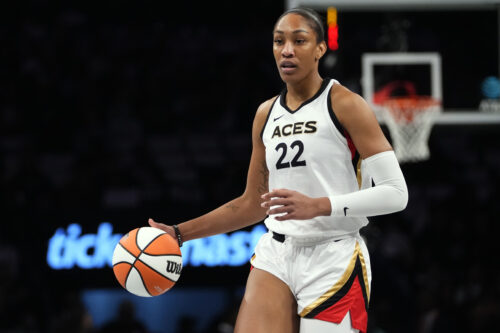
A’ja Wilson The Face of the Las Vegas Aces

A’ja Wilson isn’t just a star. 

She’s the cornerstone of the Las Vegas Aces’ game plan and one of the WNBA’s most complete players. 

A two-time MVP and a proven champion, Wilson has shaped the team’s identity on both ends of the floor.

At 6’4”, Wilson blends athleticism, footwork, and basketball IQ into a package that’s hard to counter. 

Her ability to defend, rebound, and score makes her indispensable.

Offensive Breakdown Versatility in Motion

Post Moves and Footwork

Wilson’s inside game sets her apart. 

She uses a quick spin, pivot footwork, and soft touch to finish over bigger defenders. 

She doesn’t rush; she reads the defense before making her move.

Face-Up Game

Wilson can step out and attack off the dribble. 

Her midrange jumper is reliable, forcing defenders to choose between crowding her or risking a blow-by. 

This face-up skill stretches the floor and keeps the Aces’ offense dynamic.

Scoring Efficiency

In 2024, Wilson averaged 22.8 points per game on over 50% shooting. 

She picks her spots, rarely forcing bad shots, and thrives in transition. 

Her ability to draw fouls adds free throws to her scoring output, a quiet weapon in tight games.

Defensive Impact Anchor and Enforcer

Shot Blocking and Rim Protection

Wilson is a defensive force, ranking among league leaders in blocks. 

Her timing is exceptional; she doesn’t just rely on height but watches shooters’ eyes and reacts.

Switch ability and Perimeter Defense

Few bigs move like Wilson. 

She can switch onto guards, slide laterally, and contest shots without fouling. 

This gives the Aces flexibility in defensive schemes and helps them shut down pick-and-roll heavy offenses.

Rebounding Prowess

Wilson’s rebounding averages hover around 9-10 per game, but numbers only tell part of the story. 

She boxes out, reads angles well, and starts fast breaks with quick outlet passes.

Leadership and Intangibles

Locker Room Presence

Wilson is more than her stats. 

She’s vocal, keeps teammates focused, and brings energy during slumps. 

Her leadership is part of why the Aces maintain composure under playoff pressure.

Big Game Performance

Wilson doesn’t shrink under the spotlight. 

Whether it’s the Finals or a late-season push, she elevates her play, often taking over in crunch time.

How She Fits the Las Vegas Aces System

Offensive Catalyst

The Aces run plenty of sets through Wilson, from pick-and-rolls to isolation plays. 

Her ability to pass out of double teams opens shots for perimeter players like Kelsey Plum and Jackie Young.

Defensive Backbone

The team’s defense starts with Wilson. 

Her presence in the paint changes opponent shot selection, and her switching helps guard-heavy teams struggle to find mismatches.

Strengths and Areas to Watch

Key Strengths

  • Elite footwork and touch in the post

  • Reliable midrange jumper

  • Switchable defender

  • High basketball IQ

  • Consistent rebounding

Areas to Improve

  • Extending range to the three-point line (has improved but still a work in progress)

  • Turnovers under heavy defensive pressure

  • Staying out of foul trouble in key moments

Final Thoughts Why A’ja Wilson Defines the Aces

A’ja Wilson isn’t just the Aces’ best player, she’s the heart of their success. 

Her mix of skill, leadership, and defensive presence makes her the blueprint for modern WNBA forwards. 

As she continues refining her game, the ceiling only rises.

Opponents game-plan around her. 

Fans rally behind her. And the Aces’ championship hopes run directly through her hands.

Breaking Down Shai Gilgeous-Alexander Strengths Weaknesses & NBA Impact

Breaking Down Shai Gilgeous-Alexander Strengths Weaknesses & NBA Impact

Shai Gilgeous-Alexander Scouting Report Complete Analysis

Overview of Shai Gilgeous-Alexander’s Role on the Thunder

Shai Gilgeous-Alexander (SGA) is the engine behind the Oklahoma City Thunder. 

At 6’6”, he plays as a lead guard but his versatility lets him operate across backcourt positions. 

Shai has transformed into an All-NBA player and MVP candidate, driving OKC’s playoff push and anchoring both scoring and playmaking duties.

SGA’s style isn’t flashy for the sake of it. 

It’s measured, methodical, and brutally effective. 

He sets the tempo, manipulates defenses, and elevates teammates by consistently making the right read. 

Let’s break down what makes him special, and where he still has room to grow.

Offensive Strengths

Elite Scoring Versatility

Shai’s scoring game is built on craft, pace, and control rather than pure speed. 

He’s deadly in isolation, ranking among the league’s best in points per possession. 

His signature move, the slow, shifty drive, freezes defenders who struggle to guess whether he’ll finish, pull up, or kick out.

In the paint, SGA uses long strides, hesitation dribbles, and creative angles to score over bigger defenders. 

Despite not being an explosive leaper, he averaged over 30 points per game thanks to a blend of floaters, midrange jumpers, and finishes with either hand.

Midrange Mastery

Few guards control the midrange like Shai. 

He calmly navigates pick-and-rolls, stopping on a dime to knock down pull-ups. 

Defenses often prefer giving up contested twos, but Shai makes them pay by hitting them at a high clip.

This midrange efficiency keeps defenses honest and opens passing lanes, making him unpredictable. 

It also provides a go-to option in crunch time when defenses tighten.

Crafty Playmaking

SGA isn’t just a scorer. 

He reads defenses and reacts quickly, finding open shooters and cutters. 

His assists don’t come from forcing plays, they flow naturally within the offense. 

Averaging around six assists per game, he controls possessions while minimizing turnovers.

His calm pace allows him to see plays develop, and he rarely gets sped up by pressure, a critical trait for a primary ball handler.

Defensive Profile

Defensive Tools & Impact

At 6’6” with a near 7-foot wingspan, Shai has the length to disrupt passing lanes and contest shots. 

His defensive stance is solid, and he communicates well within OKC’s young core.

He averages over a steal per game, often by baiting passes and pouncing with quick hands. 

Against bigger guards, his length forces tough shots.

Areas for Growth

While Shai is a willing defender, he sometimes struggles navigating screens. 

Adding muscle and sharpening lateral quickness would help him stick with elite point guards.

Occasionally, he gambles for steals, leaving gaps behind. 

Tightening discipline would raise his defensive ceiling even higher.

Advanced Metrics & Impact on Winning

Advanced stats support Shai’s All-NBA status. 

His true shooting percentage stays above league average despite high usage. 

His on/off splits show the Thunder’s offense significantly declines when he sits.

Defensively, his size helps OKC switch schemes. 

Even if he isn’t a lockdown stopper, his presence makes their backcourt harder to attack.

Plus-minus numbers illustrate his overall value: when he’s on the floor, OKC plays like a top-tier team.

Intangibles & Leadership

SGA’s calm demeanor sets the tone for OKC. 

He rarely shows frustration and stays composed under pressure. 

Young teammates follow his lead, and he’s become the face of the franchise.

He trains relentlessly, adding new counters to his offensive game every offseason. 

Coaches praise his work ethic and willingness to sacrifice personal stats for team success.

Comparison & NBA Outlook

Shai’s unique blend of patience and craft draws comparisons to players like DeMar DeRozan and Luka Dončić, though his defense and off-ball movement give him a different edge.

At 26, he’s entering his prime. 

If he keeps improving his outside shot and defensive consistency, Shai could push into perennial MVP discussions.

Summary Why Shai Gilgeous-Alexander is Special

Shai Gilgeous-Alexander isn’t built on highlight dunks or viral plays. 

His game is about control, craft, and constant pressure on defenses. 

He’s efficient, unselfish, and versatile enough to adjust to any opponent.

OKC’s future revolves around him, and if recent seasons are a sign, that’s a safe bet. 

With continued growth, Shai is poised to remain among the NBA’s elite guards for years.

How Kevin McHale Dominated The Post For The Boston Celtics

How Kevin McHale Dominated The Post For The Boston Celtics

Kevin McHale Scouting Report Breaking Down the Boston Celtics Legend

Kevin McHale isn’t just another Hall of Famer, he’s a case study in how fundamentals, creativity, and sheer competitiveness can redefine the power forward position. 

Let’s break down what made him a Boston Celtics cornerstone and an NBA icon.

Offensive Arsenal That Made Defenders Guess

Elite Low-Post Moves

McHale’s offensive game was built around an unmatched low-post toolkit. 

He had every move, drop steps, jump hooks, up-and-unders, baseline spins, and his trademark “torture chamber” series. 

Opponents knew what was coming and still couldn’t stop it.

What set McHale apart was how effortlessly he switched moves mid-play. 

If a defender cut off his baseline spin, he’d pivot to a baby hook. 

If double-teamed, he’d find an open shooter without hesitation. 

His footwork wasn’t flashy, it was clinical and deadly.

Scoring Efficiency

McHale finished his career shooting over 55% from the field. 

At his peak, he averaged 26.1 points per game (1986-87) without relying on volume shooting. 

His ability to score efficiently was crucial for Boston, keeping defenses honest and opening lanes for teammates.

Even more impressive, McHale rarely turned the ball over in the post, showing elite balance and poise. 

He maximized every possession, a trait every coach values.

Defensive Impact Beyond Blocks

Versatile Defender

While McHale earned praise for his offensive footwork, his defense was equally formidable. 

At 6’10” with a wingspan over seven feet, he guarded both forwards and centers effectively. 

He wasn’t the fastest, but he read plays better than most.

McHale often switched onto quicker forwards without giving up easy drives. 

His timing on contests forced bad shots, and he used positioning rather than sheer athleticism to protect the rim.

Team Defense and Basketball IQ

In Boston’s defensive schemes, McHale excelled as both a help defender and primary stopper. 

His understanding of spacing allowed him to rotate quickly and clog driving lanes. 

He communicated constantly, a big reason why the Celtics stayed organized.

McHale averaged 1.7 blocks per game over his career, but raw numbers only tell part of the story. 

He disrupted countless shots, forced bad passes, and helped Boston become one of the league’s toughest defenses.

Rebounding and Hustle

Relentless on the Glass

McHale wasn’t the flashiest rebounder, but he was relentless. 

Averaging 7.3 rebounds per game across his career, he battled bigger centers and never shied away from contact. 

His box-outs were textbook, clearing space for teammates like Larry Bird or Robert Parish.

On offense, McHale turned many missed shots into second-chance points. 

His quick put-backs added momentum-changing buckets that often broke opponents’ runs.

Toughness and Durability

Playing through injuries, especially his broken foot in the 1987 playoffs, showcased McHale’s mental toughness. 

He logged heavy minutes when the Celtics needed him most, a testament to his will and commitment to winning.

Intangibles That Elevated the Celtics

Team-First Attitude

McHale never chased stats or spotlight. 

He embraced coming off the bench early in his career, winning two NBA Sixth Man of the Year awards. 

That selflessness made Boston deeper and more unpredictable.

Championship Pedigree

With three NBA titles (1981, 1984, 1986), McHale’s playoff performances were vital. 

He raised his scoring when it mattered and played suffocating defense against elite opponents. 

His presence helped define Boston’s championship culture of the 1980s.

Weaknesses and Limitations

Outside Shooting

McHale dominated inside, but he rarely stepped out beyond mid-range. 

In today’s NBA, his lack of three-point shooting might limit spacing. 

Still, his inside efficiency largely offset that weakness.

Playmaking

Though an underrated passer from the post, McHale wasn’t a high-assist player. 

His role didn’t demand it, but compared to modern big men, his playmaking volume was lower.

Kevin McHale’s NBA Legacy

Kevin McHale’s legacy is built on fundamentals and adaptability. 

His footwork has become a blueprint for generations of post players, from Tim Duncan to modern stars like Joel Embiid. 

Coaches still use McHale’s moves to teach post offense today.

Beyond stats, McHale embodied what made those 1980s Celtics teams so great: toughness, selflessness, and relentless competitiveness. 

His battles against legends like Kareem Abdul-Jabbar and James Worthy became must-watch matchups that still get replayed.

Even after retiring, McHale shaped the NBA as a coach and executive. 

But it’s his on-court mastery, especially in the post, that cements him as a timeless figure in basketball history.

Nikola Jokić The Unstoppable Engine Behind The Denver Nuggets’ Success

Nikola Jokić The Unstoppable Engine Behind The Denver Nuggets’ Success

Nikola Jokić, the Serbian big man drafted 41st overall in 2014, has shattered every expectation. 

Today, he’s the cornerstone of the Denver Nuggets, redefining the center position with vision, touch, and IQ. 

In 2025, fresh off another dominant playoff run, Jokić remains the league’s most versatile offensive force.

Offensive Mastery

Elite Playmaking and Court Vision

Jokić isn’t just a scoring threat, he’s the best passing big man the NBA has ever seen. 

His ability to read defenses, deliver no-look dimes, and run the offense from the high post makes him Denver’s true point center. 

Opponents struggle to double-team him without paying for it, as he’ll instantly find an open cutter or shooter.

In half-court sets, Jokić orchestrates with calm precision. 

His hand-offs trigger dribble handoff actions that force defenders to chase, often freeing up Jamal Murray or Michael Porter Jr. for open shots. 

His timing, touch passes, and anticipation keep the Nuggets’ offense unpredictable and hard to guard.

Scoring Craft and Touch

Jokić averages over 25 points per game, not by overpowering defenders, but by outthinking and outmaneuvering them. 

His footwork in the paint is exceptional: spins, pivots, and feints that freeze even elite defenders. 

The signature Sombor Shuffle, a one-legged fadeaway jumper, is nearly unguardable due to his high release and soft touch.

He scores efficiently from everywhere, post-ups, floaters, mid-range jumpers, and occasional three-pointers. 

While his volume from deep is modest, his willingness to shoot keeps defenses honest.

Basketball IQ and Decision-Making

Perhaps Jokić’s greatest strength is his mind. His choices rarely look rushed. 

He reads the game several moves ahead, manipulating defenders like a chess master. 

Whether it’s knowing when to attack, when to pass, or when to slow the tempo, Jokić keeps the Nuggets in control.

Defensive Impact

Positional Defense and Awareness

Jokić isn’t an elite shot-blocker, but he’s far from a liability. 

His strength allows him to hold ground in the post, and his quick hands generate steals on entry passes. 

He plays angles well, cutting off drives and forcing tougher shots.

He also rebounds at a high level, averaging double-digit boards per game. 

His defensive rebounding ends possessions and starts Denver’s transition game, often with his own outlet passes.

Weaknesses on Defense

Jokić’s lateral quickness can be exploited by smaller, faster players. 

Teams target him in pick-and-rolls, trying to drag him into space. 

While he’s improved his drop coverage and footwork, he can still struggle against elite guards who pull up quickly or hit pocket passes to rolling bigs.

Leadership and Intangibles

Team Anchor

Jokić leads by example rather than voice. 

Teammates trust his calm, steady approach, especially in tight games. His unselfish play encourages ball movement, making everyone around him better.

His ability to keep composure under pressure is rare. 

Even after tough possessions, he stays locked in, which helps Denver recover from scoring droughts.

Conditioning and Durability

Early in his career, conditioning was a question. 

Now, Jokić routinely logs heavy minutes without noticeable drop-off late in games. 

His durability has been crucial for the Nuggets, especially during playoff pushes.

Evolution and Future Outlook

At age 30 in 2025, Jokić shows no signs of slowing down. 

His game was never built on speed or athleticism, so aging likely won’t erode his impact as quickly as it might for others. 

Expect his passing and shooting touch to remain elite.

The Nuggets continue to build around him, and as long as Jokić is on the floor, Denver remains a championship contender. 

Younger centers may come with more athleticism, but none can match Jokić’s blend of skill and mind.

Final Analysis

Nikola Jokić is the modern center redefined. 

His playmaking alone makes him special; combined with scoring, rebounding, and leadership, he’s an MVP-level force. 

Defensively, he has limits in space, but his IQ and positioning offset many weaknesses.

The numbers, triple-doubles, efficiency metrics, back up what the eye test shows. 

Jokić is Denver’s engine, the NBA’s ultimate offensive hub, and a player whose style continues to change how basketball is played.

Larry Bird’s Skill Set And Competitive Edge A Deep Dive Into The NBA Icon

Larry Bird’s Skill Set And Competitive Edge A Deep Dive Into The NBA Icon

Larry Bird, a 6’9″ forward drafted by the Boston Celtics in 1978, redefined what it meant to be a complete player. 

Over 13 seasons, Bird earned three NBA Championships, three MVP awards (in consecutive years: 1984, 1985, 1986), and a place in the Hall of Fame. 

But beyond stats, Bird was a master of basketball IQ, work ethic, and cold-blooded competitiveness.

Strengths

Elite Shooting Ability

Bird was one of the purest shooters in NBA history. 

He had range well beyond the arc, deadly accuracy from mid-range, and near-automatic free-throw shooting (88.6% career average). 

Whether pulling up in transition or spotting up off the ball, Bird’s release was quick and consistent. 

He could create his own shot or score within the flow of an offense.

Court Vision and Passing

Bird’s playmaking ability was elite for a forward. 

He averaged 6.3 assists per game over his career, not just high volume, but high quality. 

His no-look dimes, behind-the-back feeds, and full-court outlet passes were signature tools in his arsenal. 

He saw plays develop seconds before others did.

Basketball IQ

Perhaps Bird’s most defining strength. 

He outsmarted defenders and manipulated games without relying on athleticism. 

Whether baiting defenders into bad switches or positioning himself perfectly for rebounds, Bird made high-IQ decisions every possession. 

His understanding of angles, timing, and opponent tendencies was unmatched.

Clutch Factor

Bird thrived under pressure. 

Known for trash talk and backing it up, he wanted the last shot and hit it more often than not. 

His confidence never wavered, and his execution in fourth quarters and playoff moments became legendary.

Rebounding Prowess

Averaging 10 rebounds per game for his career, Bird was relentless on the glass. 

He wasn’t the most athletic player, but he boxed out with precision, anticipated caroms, and hustled for every loose ball.

Weaknesses

Limited Athleticism

Bird was not fast. He lacked top-end speed and vertical athleticism. 

He relied heavily on positioning and timing, but quicker and more explosive defenders could occasionally disrupt his rhythm.

Defense vs. Speedy Guards

While Bird was an intelligent team defender and anticipated well in passing lanes, he struggled when forced to guard elite, quick guards in isolation. 

His lateral movement wasn’t strong enough to consistently contain the fastest players.

Injury History

Back problems plagued Bird in the latter part of his career, significantly limiting his mobility and contributing to an early retirement. 

His physical durability, especially after 1988, became a liability.

Intangibles

Leadership

Bird wasn’t vocal in the traditional sense but led by example and held teammates accountable. 

His toughness, professionalism, and obsession with winning set the tone for Celtics culture. 

He inspired fear and respect in both teammates and opponents.

Competitiveness

Few matched Bird’s intensity. 

He took every game personally and had an infamous edge. 

Stories of him predicting shots, outscoring opponents with his off hand, or talking trash mid-game aren’t just folklore, they’re well-documented and speak volumes.

Work Ethic

Bird’s commitment to practice, preparation, and improvement was fanatical. 

He maximized every ounce of talent he had through repetition and sheer will. 

He outworked opponents before and after the game, physically and mentally.

Career Stats Snapshot

  • Points per Game (PPG): 24.3


  • Rebounds per Game (RPG): 10.0
  • Assists per Game (APG): 6.3
  • Field Goal %: 49.6%
  • 3-Point %: 37.6%
  • Free Throw %: 88.6%
  • MVPs: 3 (1984, 1985, 1986)
  • NBA Titles: 3 (1981, 1984, 1986)

How Bird’s Game Would Translate to Today

Bird’s skill set, elite shooting, versatile playmaking, and high basketball IQ, would translate exceptionally well to today’s NBA. 

In an era that values spacing, ball movement, and offensive versatility, Bird would thrive. 

While he’d still be challenged on defense against high-speed guards, his offensive efficiency and leadership would keep him at All-NBA levels.

His ability to play multiple positions (stretch four or even small-ball five) makes him adaptable in modern schemes. 

He’d likely take even more threes and improve his assist totals in today’s open-court style.

Final Evaluation

Larry Bird wasn’t the fastest or most physically gifted player, but he might’ve been the smartest. 

His shooting stroke was flawless, his court awareness elite, and his drive to win relentless. 

As a teammate, leader, and competitor, Bird was the complete package. 

If you’re building a scouting blueprint for winning basketball, Larry Bird is Exhibit A.

Pin It on Pinterest