G-LSG24L9FDK
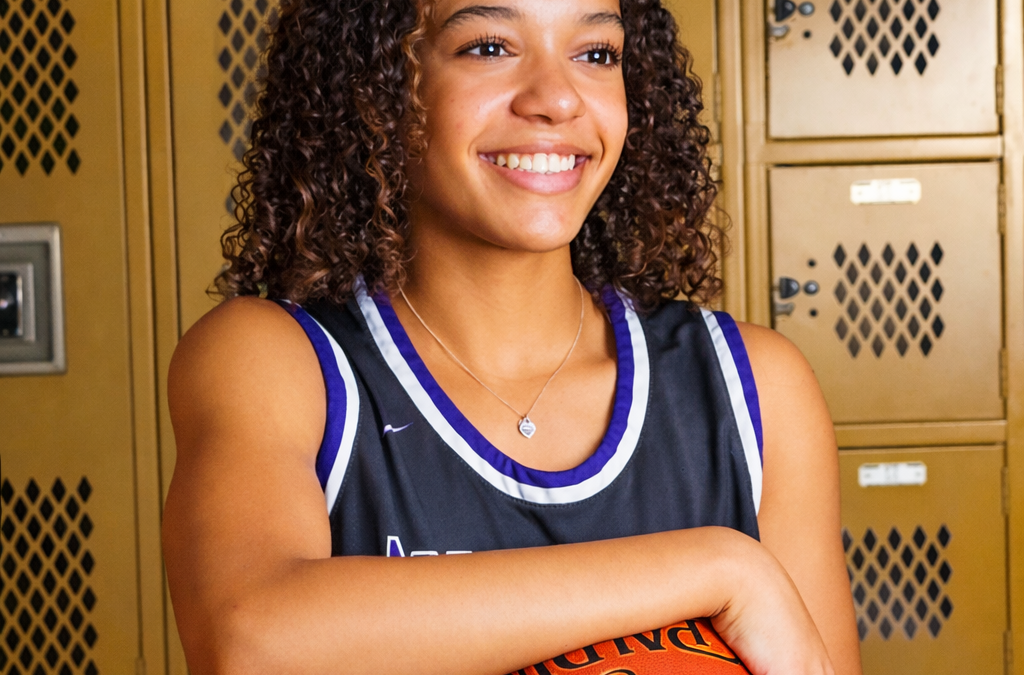
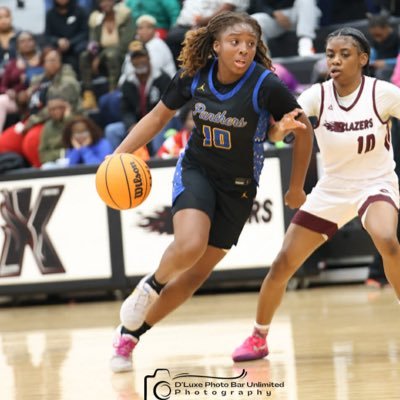
Sydney Blaine Balanced Guard With High Basketball IQ

Sydney Blaine Balanced Guard With High Basketball IQ

Sydney Blaine is a 5’10 Class of 2027 guard from Lenexa, Kansas, attending Notre Dame de Sion and carrying a 4.21 GPA. 

Playing for Della Lamb 16U 3SSB, she has expanded her role this season from natural shooting guard to primary ball handler. 

That transition has highlighted her feel for the game and ability to balance scoring with facilitation. 

She averages 14.3 points, 4 rebounds, and 3 steals per game while connecting on 37 percent from three-point range. 

A former All-District selection as a freshman, she faced adversity as a sophomore with a 10-game injury absence, yet returned focused and driven. 

Blaine plays with maturity and values winning over individual accolades, which shows in her approach to every possession.


Strengths

  • Consistent perimeter shooting with clean mechanics and range.
  • Positional size at 5’10 allows her to see over defenses.
  • Active defender who pressures the ball and jumps passing lanes.
  • Strong rebounding guard who competes on both ends.
  • Smart decision-maker improving as a lead guard.
  • High academic achiever who brings discipline and accountability.


Areas to improve
Continue tightening ball control against elite pressure and add strength to finish through contact. Expanding mid-range creation will make her even tougher to guard.


Projected role
Sydney Blaine projects as a combo guard at the college level who can stretch the floor, defend multiple perimeter spots, and provide secondary playmaking in a structured system.


For More Information
X platform formerly known as Twitter
Full Scouting Report

Sydney Blaine Balanced Guard With High Basketball IQ

Sydney Blaine Rising Guard Built For Big Moments

Sydney Blaine is a 5’10 versatile guard in the 2027 class out of Lenexa, Kansas, competing for Della Lamb 16U 3SSB and Notre Dame de Sion. 

A natural shooting guard who has transitioned into more point guard responsibilities this season, she is averaging 14.3 points, 4 rebounds, and 3 steals per game while shooting 37 percent from three. 

Blaine stretches the floor with confident range and repeatable mechanics, and she is comfortable shooting off the catch or pulling up when defenders go under screens. 

Her size at the guard spot allows her to see over pressure and make simple, effective reads.

Defensively, she plays with urgency. 

She works hard on the ball, anticipates passing lanes, and competes every possession. 

A former All-District selection as a freshman, she battled through adversity after missing 10 games as a sophomore due to injury, returning with a clear team-first mindset. 

Blaine consistently emphasizes winning over personal numbers, and that approach shows in how she moves the ball and embraces tough assignments.


Evaluation Summary:
Sydney Blaine brings positional size, shooting touch, and defensive activity that translate well to the college game. 

At 5’10, she has strong physical tools for a combo guard and continues to grow into the point guard role. 

Her 37 percent three-point shooting forces defenses to honor her spacing. 

She plays with good pace and understands when to attack versus when to facilitate. 

Blaine rebounds well for a guard and competes on the glass. 

Her 3 steals per game reflect strong anticipation and effort. 

She processes the game well and values possessions. 

She has shown resilience after injury and maintains a high academic standard with a 4.21 GPA. 

Her impact goes beyond scoring, as she influences tempo and defensive intensity.


Key Development Areas:

  • Tighten handle under heavy pressure to expand playmaking ceiling.
  • Add functional strength to finish through contact consistently.
  • Continue improving vocal leadership as a primary ball handler.


Long-Term Outlook:
Sydney Blaine projects as a high-level combo guard who can thrive in a motion or read-and-react college system. 

Her ability to shoot, defend, and embrace winning habits gives her a strong foundation. 

As she continues to refine her point guard skills, her value will rise. 

The combination of academics, toughness, and versatility makes her a reliable long-term investment. 

I firmly believe Sydney Blaine will impact a college program as a winning guard who elevates those around her.

In My Opinion: The Transfer Portal Is Hurting High School Basketball

In My Opinion: The Transfer Portal Is Hurting High School Basketball

Let’s stop pretending.

The transfer portal is not just changing college basketball. It is gutting high school basketball.

For years, high school players worked toward one goal: earn a scholarship. Play well. Develop. Get noticed. Climb the ladder. That ladder is now being kicked away.

College coaches are no longer building programs. 

They are shopping. And they are not shopping in high school gyms. They are scrolling through the portal.

Why recruit a 17-year-old who needs development when you can grab a 22-year-old who already played three years of Division I basketball?

That mindset is suffocating high school recruiting.

The portal has created a lazy recruiting culture. 

Coaches no longer need to project potential. 

They do not need patience. They do not need vision. They want plug-and-play athletes. 

Immediate production. Older bodies. Proven statistics.

And high school players are paying the price.

Scholarship offers are shrinking. Rosters are shrinking. Opportunities are shrinking.

A high school senior used to compete against his class. 

Now he is competing against grown men with college film, strength programs behind them, and years of experience. It is not a fair fight. It is not even close.

The message to high school athletes is clear: “We would rather take someone else’s leftovers than develop you.”

That is harsh. But that is reality.

The portal has turned recruiting into free agency. 

Coaches treat players like interchangeable parts. Loyalty is gone. Long-term development is an afterthought.

High school coaches are frustrated. AAU programs are frustrated. Families are confused. They were told that exposure was the key. That playing on the right circuit mattered. That rankings mattered.

Now even highly ranked high school players are watching college programs fill rosters before they ever call.

The portal has created roster panic. 

Coaches oversign. Players transfer. More players transfer to replace them. It is a revolving door of instability. And in that chaos, high school kids are invisible.

College basketball used to invest in freshmen. Now freshmen are liabilities.

If they struggle early, they get buried. If they develop slowly, they get replaced. If they show promise but not instant impact, a transfer takes their minutes.

So what happens?

High school players are told to “reclassify.” Or go prep. Or go to junior college. Or walk on. Or wait.

Wait for what?

The portal does not slow down.

It has also damaged the concept of development. Programs used to pride themselves on building players over four years. Strength. Skill. Leadership. Growth.

Now it is year-to-year survival. Coaches recruit to save their jobs. They chase transfers because transfers feel safer.

Safer for them.

Not for the kids coming out of high school.

The portal has also inflated egos and distorted expectations. 

High school athletes now believe transferring is automatic if things do not go perfectly. Commitment means less. Patience means nothing.

That mindset trickles down.

Instead of choosing schools for fit and development, decisions are based on short-term exposure and social media buzz. 

If it does not work instantly, the exit door is wide open.

But here is the brutal truth no one wants to say: most players in the portal are not stars. Most are not upgrades. 

Many are chasing something that does not exist.

And yet coaches still choose them over high school players.

Why?

Because they are known. Measured. 

Scouted against college competition. That feels safer than projecting a teenager’s upside.

High school basketball has become collateral damage.

The scholarship pie is not growing. It is being redistributed. And high school players are getting crumbs.

Mid-major programs used to rely heavily on high school recruiting. Now they wait for Power Five leftovers in the portal. 

Power Five programs reload with transfers from mid-majors. It is a food chain.

And the bottom of that chain is the high school senior.

We are watching a generation of players lose opportunities before they ever get a real shot.

The portal was supposed to empower athletes. In some cases, it has. 

But in many others, it has created instability, selfish decision-making, and a recruiting environment that punishes youth.

High school basketball is supposed to be about growth, foundation, and projection. The portal has shifted the focus to immediate return.

Immediate impact!

Immediate results!

Immediate pressure!

There is nothing patient about this system. Nothing developmental. Nothing stable.

And high school players are left wondering what happened to the path that used to exist.

The truth is simple.

The transfer portal did not just add options. It changed priorities.

Coaches now recruit experience over potential. Production over projection. Survival over development.

That shift may help some programs win faster.

But it is choking the pipeline.

If this continues unchecked, high school basketball will no longer be the primary entry point into college basketball. It will be a waiting room. A holding pattern. A backup plan.

And that is a shame.

Because the game used to be built on developing young players.

Now it is built on replacing them.

NIL Money Is Booming But Is College Basketball Built To Survive It?

NIL Money Is Booming But Is College Basketball Built To Survive It?

Men’s and women’s college basketball are cashing bigger checks than ever, and that should terrify everyone who actually cares about the sport. 

The arenas are packed. 

Television ratings are climbing. 

NIL money is flowing. 

Players are finally getting paid. 

And yet, beneath the highlight reels and March madness, the financial model looks dangerously unstable.

Let’s stop pretending this is business as usual. 

College basketball has changed. 

The old amateur model is gone. 

In its place is a fast-moving, loosely regulated marketplace driven by NIL deals, donor-backed collectives, and escalating financial demands. 

The question is not whether players deserve to be paid. They do!!!

The real question is whether men’s and women’s college basketball programs can sustain the pace of this financial arms race without crashing.

Start with the obvious: basketball is a revenue engine. 

On the men’s side, the NCAA tournament alone generates billions in television revenue. 

The women’s game is surging as well, with record-breaking ratings and increased sponsorship attention. 

Corporate brands are lining up. 

Apparel companies are writing large checks. 

Booster collectives are promising top recruits six-figure and even seven-figure NIL packages.

From the outside, it looks like growth. 

Inside athletic departments, it feels like pressure.

I want to be clear. NIL is not the villain here. For decades, players filled arenas, drove television contracts, and had no legal path to profit from their own name, image, and likeness. 

That was unfair. 

A star point guard selling jerseys and boosting ticket sales absolutely deserves a piece of the revenue. 

A breakout women’s basketball star who drives national attention should be able to capitalize on endorsement opportunities. That is common sense.

NIL has changed lives. Some athletes are graduating with real financial security instead of student loan debt. 

Others are supporting their families while still in school. For players who will never reach the NBA or WNBA, these opportunities can provide a critical financial head start. 

That is a positive development, and anyone who denies that is ignoring reality.

But here is the problem no one wants to confront: the spending is escalating faster than the structure governing it.

In men’s college basketball, recruiting now resembles professional free agency. 

Programs are not just evaluating talent. They are negotiating NIL expectations. 

Boosters and collectives quietly compete to assemble the most attractive financial packages. 

Players enter the transfer portal and immediately become commodities in an open marketplace. Loyalty is fragile. Stability is rare.

Women’s college basketball is heading in the same direction. 

The increased visibility and popularity of the sport have brought significant endorsement money. 

Star players are building personal brands that rival established professionals. 

That visibility is good for the sport. It elevates the profile of women’s athletics. It creates new pathways for financial empowerment.

But here is the uncomfortable truth: most women’s basketball programs do not generate the same revenue as the elite men’s programs. 

Even some men’s programs outside the power conferences struggle to turn a profit. 

So when NIL expectations rise across the board, where does the money come from?

At powerhouse schools with deep donor bases, the answer is simple. 

Wealthy boosters fund collectives. 

Corporate sponsors step in. Media exposure drives additional deals. The top tier will find a way to compete financially.

Mid-major programs? Smaller schools? They are stuck trying to keep up in a race they cannot afford to run.

This is where the financial disaster becomes a real possibility. 

When spending outpaces sustainable revenue, collapse follows. Athletic departments already operate on tight margins. Many rely heavily on football revenue to subsidize other sports, including basketball. 

If NIL commitments continue to escalate without clear financial guardrails, some programs will overextend themselves.

Donor fatigue is real. Booster enthusiasm is not infinite. 

Economic downturns happen. Corporate marketing budgets shift. What happens when the promised NIL money dries up but expectations remain sky high?

Roster instability becomes another hidden cost. 

The transfer portal has turned men’s and women’s college basketball into revolving doors. 

Players chase better NIL opportunities. 

Coaches scramble to re-recruit their own rosters while pursuing transfers who can produce immediately. 

Development suffers. Team culture erodes. Long-term planning disappears.

From a fan perspective, it is exhausting. From a financial perspective, it is dangerous. 

Programs are investing heavily in short-term roster upgrades without long-term stability. That is not a sustainable strategy.

And let’s address the uncomfortable imbalance. 

A handful of elite men’s basketball programs can realistically generate enough revenue to support aggressive NIL spending. 

The same is true for a select few women’s programs with national brands and major media exposure. 

But beyond that upper tier, the math gets shaky fast.

If a mid-level program commits significant resources to attract and retain top talent, but fails to advance deep into the postseason or secure major television exposure, the return on investment may not justify the expense. 

Multiply that scenario across dozens of schools, and you start to see the cracks forming.

Meanwhile, the governing body, the National Collegiate Athletic Association, appears reactive rather than proactive. 

Rules shift. Court cases challenge restrictions. Policies are adjusted in response to pressure rather than guided by long-term financial planning. That is not leadership. That is damage control.

Men’s and women’s college basketball are drifting toward a semi-professional model without the financial infrastructure of true professional leagues. 

There is no centralized salary cap. No standardized revenue sharing model. No uniform contract system. 

Instead, there is a patchwork of collectives, state laws, and institutional policies.

That kind of fragmentation invites instability.

To be clear, I am not arguing that players should go back to being unpaid. 

That era needed to end. 

But paying players without a coherent financial framework is reckless. If universities cannot clearly define sustainable spending limits, transparent reporting standards, and long-term funding strategies, the bubble will eventually burst.

The irony is brutal. NIL was designed to empower athletes. In many ways, it has. But if the financial model collapses under uncontrolled spending, athletes could suffer the consequences. Program cuts. Reduced scholarships. 

Fewer opportunities. Less competitive balance. The very progress being celebrated could stall.

Men’s and women’s college basketball are at a tipping point. 

The sport has never been more visible. 

The talent has never been more marketable. The endorsement opportunities have never been greater. That should be a moment of strength.

Instead, it feels like a gamble.

Can college programs continue to shell out increasing NIL money year after year? Can donor-backed collectives sustain seven-figure commitments without guaranteed returns? 

Can smaller schools survive in a marketplace dominated by financial heavyweights?

Those are not dramatic questions. They are practical ones.

Right now, college basketball looks like a booming industry. 

Packed arenas. Viral highlights. Massive tournament payouts. But industries that expand rapidly without structural discipline often face painful corrections. Growth is not the same as stability.

If leadership does not step in and create a transparent, enforceable, financially responsible framework for NIL and player compensation in men’s and women’s college basketball, the consequences will not be subtle. 

Programs will cut costs. Competitive balance will erode. Some schools may opt out of the arms race entirely.

The players deserve to be paid. 

That is not up for debate. The real debate is whether the system paying them is financially built to last.

Right now, it does not look like it is!!!

Hannah Riles Thrives Under Pressure In Crucial Moments

Hannah Riles Thrives Under Pressure In Crucial Moments

Hannah Riles, 5’9 guard from Lake City, South Carolina, Class of 2029, is a versatile perimeter scorer with a reputation for clutch shooting. 

Ranked #34 nationally with a 4.5 GPA, she can stretch defenses with deep range and consistently create space for her own shot. 

Hannah possesses quick hands, smart decision-making, and excellent court awareness, making her effective in both transition and half-court sets. 

Her ability to read defenses and anticipate plays allows her to make high-percentage decisions while maintaining her scoring efficiency. 

College coaches will appreciate her work ethic, leadership qualities, and ability to perform in high-pressure moments. 

Hannah’s profile marks her as a rising talent ready to contribute early in her collegiate career.


Strengths 

  • Elite three-point shooter with range extending past the arc


  • Smart off-ball movement creating open shots and driving lanes
  • Quick, controlled ball-handling to navigate pressure defenses
  • High basketball IQ, making effective reads and smart passes
  • Competitor with strong leadership skills fostering team cohesion
  • Effective in transition, able to finish or distribute quickly
  • Rebounds well for her size, creating second-chance opportunities

Areas to Improve 

  • Explosive first step could be enhanced to break down defenses more consistently


  • Lateral quickness to improve on-ball defense against faster guards
  • Strength and conditioning to finish through contact at the rim


Projected Role
Hannah Riles projects as a primary perimeter scorer and floor-spacer. 

She will be tasked with stretching defenses, generating transition points, and providing clutch shooting late in games. 

With continued development, she can become a primary option in the half-court and a reliable defender against opposing guards. 

Coaches can expect her to contribute immediately while growing into a leadership role.


For More Information:
X platform formerly known as Twitter
Full Scouting Report

Pin It on Pinterest