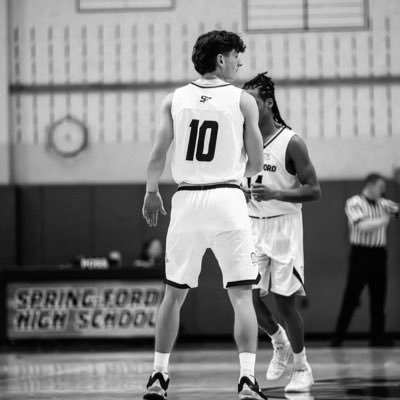
Declan Plate Scouting Report 2027 Spring-Ford Basketball Guard

Declan Plate Scouting Report 2027 Spring-Ford Basketball Guard

Declan PlateClass Of 2027 Spring-Ford Basketball Guard

Declan Plate, a 6'3" Class of 2027 guard from Spring-Ford, is a developing boys basketball prospect who also competes on the AAU circuit with Uptown MHA.

His combination of guard size, versatility, and continued development makes him an intriguing player to follow as he progresses through his high school career.

At 6'3", Plate possesses useful positional size in the backcourt, giving him opportunities to impact games in multiple ways. 

His physical profile allows him to develop as a player capable of handling different responsibilities offensively while matching up against multiple perimeter positions defensively.

Competing in both high school basketball and AAU competition provides 

Plate with important opportunities to sharpen his overall game against different opponents, styles, and levels of athleticism. 

Continued improvement in ball handling, shooting consistency, decision-making, strength, and defensive execution will be important areas in determining his long-term ceiling.

For college coaches evaluating the Class of 2027, Plate represents the type of prospect whose progression should be monitored. 

His size at the guard position provides a foundation to build upon, while continued skill development and productive performances could strengthen his recruiting profile. 

The next stage will be about turning potential into consistent production while establishing his identity as a dependable two-way guard.
Player Information

Player: Declan Plate
Graduating Class: 2027
Height: 6'3"
Position: Guard
High School: Spring-Ford
AAU Program: Uptown MHA
Sport: Boys Basketball


Evaluations


Offensive Skill Evaluation

Plate possesses excellent guard size, developing versatility, scoring potential, and opportunities to expand his offensive effectiveness.


Defensive Evaluation

His size provides defensive versatility, allowing Plate opportunities to defend multiple perimeter positions with effectiveness consistently.


Basketball IQ

Plate continues developing his understanding of spacing, decision-making, offensive reads, defensive positioning, and overall execution consistently.


Intangibles

Continued development, competitive experience, positional size, versatility, and commitment could strengthen Plate's overall recruiting profile significantly.


Areas for Improvement

Plate should continue improving shooting consistency, ball handling, physical strength, explosiveness, and decision-making under pressure situations.


Projection

Declan Plate projects as a developing Class of 2027 guard worth tracking as his high school career progresses. 

His 6'3" frame gives him attractive size for the backcourt, particularly if he continues expanding his perimeter skill set and defensive versatility. 

Increased production, improved shooting consistency, stronger ball handling, physical development, and quality performances against strong competition could elevate his college recruiting opportunities.


Final Evaluation

Declan Plate is an intriguing Class of 2027 guard whose 6'3" size provides a strong foundation for continued development. 

His high school experience at Spring-Ford and AAU competition with Uptown MHA should provide valuable opportunities to strengthen his overall game. 

Continued improvement as a shooter, ball handler, defender, and decision-maker will be important. 

Plate should remain a prospect for college coaches to monitor as his skills, physical development, consistency, and overall production continue progressing forward.
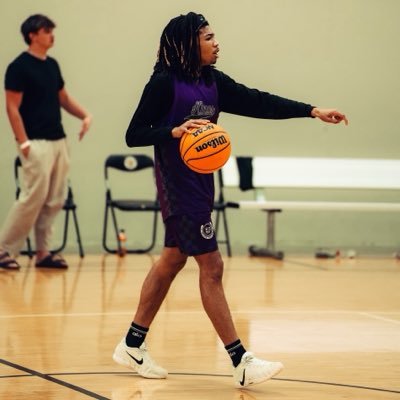
Malachi Stennett 2027 Point Guard Basketball Scouting Report

Malachi Stennett 2027 Point Guard Basketball Scouting Report

Malachi Stennett Class Of 2027 Point Guard Scouting Report

Malachi Stennett, a 5'10", 150-pound Class of 2027 point guard from Cornerstone High School in New Albany, Ohio, is a boys basketball prospect continuing to develop his game and recruiting profile.


Stennett also competes on the AAU circuit with Ohio Elite Basketball Academy (OEK) out of Columbus, Ohio, giving him additional opportunities to gain experience against competitive opponents.

As a point guard, Stennett plays a position that requires leadership, decision-making, ball security, communication, and the ability to organize an offense. 

His continued development in these areas will be important as he works toward becoming a stronger overall prospect. 

Academically, Stennett reports a 3.1 GPA, another component college programs will consider during the recruiting process.

At 5'10" and 150 pounds, adding functional strength while improving his offensive consistency could help Stennett become more effective against bigger and more physical guards. 

Continued improvement as a shooter, playmaker, defender, and decision-maker will strengthen his overall game. 

His high school and AAU opportunities provide valuable environments for development, competition, exposure, and growth as he progresses through the remainder of his high school basketball career.

Player Information

Player: Malachi Stennett
Graduating Class: 2027
Position: Point Guard
Height: 5'10"
Weight: 150 pounds
GPA: 3.1
High School: Cornerstone High School
Location: New Albany, Ohio
AAU Program: Ohio Elite Basketball Academy (OEK)
AAU Location: Columbus, Ohio
Sport: Boys Basketball


Evaluations


Offensive Skill Evaluation 

Stennett must develop consistent shooting, ball control, playmaking, penetration, finishing, and decision-making against athletic defenders consistently.


Defensive Evaluation 

Stennett can strengthen his defensive impact through improved positioning, physicality, communication, anticipation, and sustained effort consistently.


Basketball IQ 

Continued experience should help Stennett improve reads, recognize defensive coverages, manage possessions, and create opportunities efficiently.


Intangibles 

Stennett's continued development requires competitiveness, leadership, communication, confidence, discipline, consistency, and commitment to daily improvement.


Areas for Improvement 

Adding strength, shooting consistency, finishing ability, defensive physicality, and advanced playmaking should elevate Stennett's overall effectiveness.


Projection

Malachi Stennett should focus on building a complete point guard skill set throughout the remainder of his high school career. 

His development should emphasize strength, shooting efficiency, ball security, decision-making, defensive consistency, and creating opportunities for teammates. 

Playing high school basketball at Cornerstone and competing with Ohio Elite Basketball Academy should provide valuable repetitions. 

Continued improvement, productive game performances, academic progress, and increased exposure could strengthen his opportunities with college basketball programs.


Final Evaluation 

Malachi Stennett is a Class of 2027 point guard whose remaining high school development will be important to his college basketball potential. 

At 5'10", Stennett should prioritize strength, shooting consistency, playmaking, decision-making, and defensive effectiveness. 

His opportunities with Cornerstone High School and Ohio Elite Basketball Academy provide valuable competitive experience. 

Continued development, productive performances, academic commitment, and increased recruiting exposure could help Stennett establish himself as a prospect worthy of attention from college basketball programs moving forward.

Braeden Terrell Basketball Scouting Report Class Of 2027 Guard

Braeden Terrell Basketball Scouting Report Class Of 2027 Guard

Braeden Terrell Class Of 2027 Basketball Scouting Report

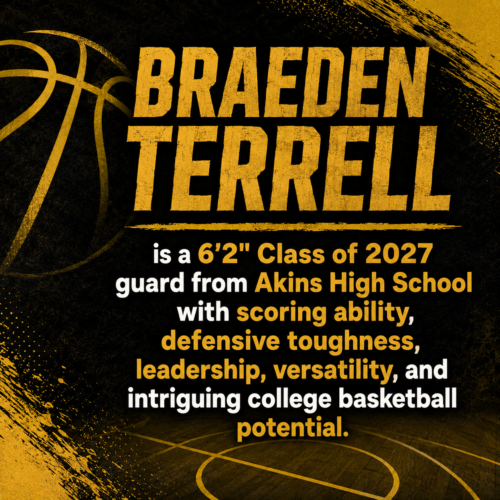
Braeden Terrell is a 6'2", 160-pound Class of 2027 boys basketball prospect from Akins High School in Austin, Texas, where he has established himself as a productive varsity guard and team leader.


Capable of playing both point guard and shooting guard, Terrell provides versatility in the backcourt while contributing on both ends of the floor. 

During his junior season, he averaged 13.8 points, 3.7 rebounds, and 3.1 assists per game, demonstrating his ability to impact multiple areas of competition.

Terrell's production has been accompanied by significant recognition. 

He earned First-Team All-District 26-6A honors and received consideration among candidates for Central Texas Defensive Player of the Year. 

His defensive reputation is particularly noteworthy because it adds another dimension to his college basketball potential beyond scoring and playmaking.

Terrell also competes on the grassroots basketball circuit with Team H.O.T., giving him additional opportunities to perform against talented competition. 

Ranked among Alamo City Hoops' notable Class of 2027 prospects, Terrell enters his senior season as an intriguing two-way guard whose combination of experience, production, defensive toughness, leadership, and positional versatility deserves continued attention from college basketball programs nationwide.

Player Information

Player: Braeden Terrell
High School: Akins High School — Austin, Texas
Graduating Class: 2027
Position: Point Guard / Shooting Guard
Height: 6'2"
Weight: 160 pounds
Jersey: #2
Shoots: Right-handed
AAU/Club: Team H.O.T.
Role: Varsity Guard / Team Captain
Junior Statistics: 13.8 PPG, 3.7 RPG, 3.1 APG
Recognition: First-Team All-District 26-6A
Prospect Recognition: Alamo City Hoops 2027 Select 30

Evaluations

Offensive Skill Evaluation

Terrell provides scoring, ball-handling, playmaking, positional versatility, and confident guard production within the offensive attack consistently.

Defensive Evaluation

Terrell brings defensive toughness, competitiveness, awareness, active pressure, and determination when challenging opposing perimeter players consistently.

Basketball IQ

Terrell demonstrates solid basketball awareness, understands his responsibilities, makes reads, and contributes within structured team basketball.

Intangibles

Terrell brings leadership, varsity experience, competitiveness, toughness, consistency, confidence, and a productive team-first approach daily.

Areas for Improvement

Continued development of shooting consistency, physical strength, decision-making, and finishing should strengthen Terrell's overall college projection.

Projection

Braeden Terrell projects as an intriguing college basketball prospect because of his ability to contribute in several areas rather than relying exclusively on scoring. 

His combination of backcourt versatility, defensive reputation, varsity production, leadership experience, and competitiveness provides a strong foundation. 

Continued improvement as a shooter, playmaker, and physical guard could significantly strengthen his recruitment. 

His senior season should provide an important opportunity to demonstrate continued development and establish himself among college programs seeking productive two-way guards.

Final Evaluation

Braeden Terrell is a Class of 2027 prospect college coaches should continue evaluating throughout his senior season. 

His scoring production, defensive reputation, leadership, positional versatility, and varsity experience give him several qualities that can translate to college basketball. 

Terrell has already demonstrated that he can contribute beyond scoring, making his two-way potential particularly interesting. 

Continued development physically and offensively could strengthen his recruiting profile and create additional opportunities with college basketball programs seeking competitive, versatile guards.

Auburn Women’s Basketball Drill Shows Why Great Players Embrace Hard Work

Auburn Women’s Basketball Drill Shows Why Great Players Embrace Hard Work

Auburn Women’s Basketball Drill Shows Why Great Players Embrace Hard Work

Introduction

I recently saw a drill from the Auburn women’s basketball program that immediately caught my attention. 

The drill was intense. 

You could see the effort, energy, and physical demands involved.

But something else stood out even more.

The player looked like she was having fun.

Recruiting Problem/Question

Young basketball players often say they want to play college basketball, but do they understand how much work goes into becoming a college-level player?

Talent gets attention. 

Consistent work helps turn that talent into something college coaches can trust.

Strategy

Learn to embrace demanding workouts instead of simply surviving them.

The Auburn drill was a great example. 

The intensity was obvious, but so was the enthusiasm. That combination matters.

Exceptional basketball players don't become exceptional by accident. 

They repeatedly work on conditioning, fundamentals, strength, decision-making, shooting, defense, and countless details that spectators rarely see.


Action Steps

Bring energy to practice. 

Compete during drills. 

Work when you're tired. 

Encourage teammates. 

Pay attention to coaching. 

Most importantly, find enjoyment in the process of improving.


Common Mistakes

One mistake players make is believing development should always be comfortable. 

Another is working hard only when coaches, parents, or teammates are watching.


Advice For Players And Parents

Players, understand that college basketball will demand more from you than high school basketball.

Parents, encourage the work without taking away the enjoyment. Basketball should be challenging, but players should still love playing it.


Conclusion

That Auburn women's basketball drill reminded me of something important: hard work and fun don't have to be opposites.

You can compete hard, sweat, struggle, push yourself beyond your comfort zone and still smile.

If you want to become an exceptional basketball player, learn to love the work.

How To Get Recruited For College Basketball: A Step-by-Step Strategy

How To Get Recruited For College Basketball: A Step-by-Step Strategy

How To Get Recruited For College Basketball: A Step-by-Step Strategy


Introduction

Getting recruited for college basketball is not something student-athletes should leave to chance.

Talent matters, but talent without exposure can remain invisible.

Every year, good basketball players graduate without receiving the college opportunities they expected. 

Some assumed coaches would eventually find them. 

Others played AAU basketball, attended showcases, posted highlights on social media, and waited for scholarship offers.

Waiting is not a recruiting strategy.

Players and parents must understand that recruiting requires consistent promotion, communication, evaluation, academics, and relationship-building.


Recruiting Problem/Question

How does a high school basketball player actually get recruited?

The biggest problem is that many families do not develop a recruiting strategy until late in high school. By then, valuable time has disappeared.

Recruiting should be approached as a process, not a senior-year emergency.


Why It Matters

College coaches have limited time, scholarships, roster spots, and recruiting budgets. 

They cannot personally discover every qualified basketball player.

Your job is to make evaluating you easier.

A player who consistently provides coaches with useful information can create opportunities that a talented but invisible player may never receive.


Recruiting Strategy

Build your recruiting strategy around five areas: development, academics, exposure, communication, and evaluation.

Continue improving as a player while creating legitimate ways for college coaches to discover and evaluate you.

Develop a realistic list of colleges. 

Gather game film. 

Create a highlight video. 

Maintain accurate academic information. 

Build a recruiting profile. 

Contact coaches consistently.

Most importantly, target schools where your basketball ability, academics, positional needs, and projected development make sense.


Step-By-Step Action Plan

  • Evaluate your current basketball ability honestly.
  • Maintain strong grades and understand college eligibility requirements.
  • Create quality game film and a short highlight video.
  • Build a recruiting profile containing basketball and academic information.
  • Research colleges at multiple competitive levels.
  • Find coaching staff contact information.
  • Send personalized recruiting emails.
  • Provide coaches with your upcoming schedule.
  • Follow up periodically with meaningful updates.
  • Continue improving regardless of current recruiting attention.

Common Mistakes

The biggest mistakes include waiting for coaches to discover you, targeting only Division I programs, sending generic messages, exaggerating your ability, ignoring academics, attending every expensive showcase, and assuming AAU participation automatically creates recruiting exposure.

Activity does not always equal progress.

Every recruiting decision should have a purpose.


College Coach Perspective

College coaches are evaluating much more than points per game.

They study size, athleticism, skill, decision-making, defense, competitiveness, body language, academics, character, positional fit, and future potential.

Coaches also want players who genuinely demonstrate interest in their programs.

Make their evaluation process easier.


Advice For Players

Take ownership of your recruitment.

Your parents and coaches can help, but ultimately college coaches are recruiting you.

Learn to communicate professionally. 

Ask intelligent questions. 

Respond promptly. 

Keep developing your game.


Advice For Parents

Parents should become strategic supporters rather than controlling the recruiting process.

Help organize information, research schools, track communications, manage travel decisions, and protect the family from unnecessary recruiting expenses.

Allow your child to develop relationships with college coaches.


FAQs

Do college coaches find players on social media?

Sometimes, but social media should support a recruiting strategy—not replace one.

Should players contact coaches themselves?

Yes. Direct communication demonstrates maturity and genuine interest.

Should players only target scholarship programs?

No. Explore Division I, Division II, Division III, NAIA, junior college, and other appropriate opportunities.


Final Takeaway

Getting recruited requires more than being good at basketball.

Student-athletes must become proactive.

Develop your game. 

Handle academics. 

Create film. 

Research schools. 

Contact coaches. 

Follow up. 

Get evaluated. 

Repeat the process.

Recruiting opportunities are rarely created by sitting around waiting.

Get visible. 

Get evaluated. 

Build relationships. 

Give college coaches reasons to recruit you.


When Should Basketball Players Contact College Coaches?

When Should Basketball Players Contact College Coaches?

When Should Basketball Players Contact College Coaches?

Introduction

One of the biggest questions basketball families ask is: When should we start contacting college coaches?

For many families, the answer is later than it should be.

That does not mean middle school players should bombard college coaches with emails. 

It means families should understand that recruiting preparation begins long before scholarship conversations become serious.

There is a difference between preparing for recruiting and expecting immediate recruitment.


Recruiting Problem/Question

Players often wait until junior or senior year before building a college list, gathering film, researching programs, or communicating with coaches.

Then panic begins.

Suddenly everyone wants exposure immediately.

A better approach is building the recruiting foundation early and increasing communication as the player develops.

Why It Matters

Recruiting is relationship-driven.

College coaches frequently evaluate prospects multiple times before making serious decisions. 

They may watch a player during high school competition, AAU events, showcases, camps, or through film.

One email rarely creates a recruitment.

Consistent, appropriate communication can keep a prospect on a coach’s radar.

Recruiting Strategy

Think in stages.

Younger players should focus primarily on development, academics, learning the recruiting process, collecting film, and identifying possible college levels.

As players progress through high school, communication should become increasingly targeted.

The goal is not sending hundreds of random emails.

The goal is identifying realistic programs and providing coaches with useful reasons to continue evaluating you.

Families should also understand that NCAA communication and recruiting rules can vary by division and change over time. 

Always verify current rules before assuming when or how a coach may respond.

Step-By-Step Action Plan

  • Begin learning about recruiting before it becomes urgent.
  • Keep academic and basketball information organized.
  • Save quality game film.
  • Research colleges at multiple levels.
  • Identify programs that fit academically and athletically.
  • Introduce yourself professionally when appropriate.
  • Send updated film as your game develops.
  • Provide tournament and high school schedules.
  • Notify coaches of significant academic or basketball achievements.
  • Track responses, interest, evaluations, and follow-ups.

Common Mistakes

Do not send meaningless weekly emails.

Do not repeatedly ask, “Are you recruiting me?”

Do not contact only famous Division I programs.

Do not allow parents to handle every conversation.

And do not interpret silence as a reason to stop pursuing every college opportunity.

Recruiting interest develops differently for every prospect.

College Coach Perspective

Coaches appreciate useful information.

A message containing updated film, your schedule, academic progress, measurable development, or legitimate accomplishments gives a coach something to evaluate.

Constant messages containing nothing new become noise.

Make every communication have a purpose.


Advice For Players

Learn how to introduce yourself.

Be confident without exaggerating.

If coaches respond, communicate professionally and begin asking questions about their program, recruiting needs, academic requirements, playing style, and evaluation process.

You are building relationships not begging for offers.


Advice For Parents

Help your child build an organized system.

Create a spreadsheet of schools, coaches, email addresses, dates contacted, responses, and follow-up dates.

Organization can prevent recruiting from becoming chaotic.

Your child should increasingly become the primary communicator.

FAQs

Is freshman year too early?

It is not too early to learn, prepare, develop film, research colleges, and understand the process.

Should players email coaches who have never seen them play?

Yes. Film and schedules can introduce prospects to programs that otherwise might never discover them.

What if coaches don't respond?

Continue developing, update your information, expand your school list, and keep pursuing realistic opportunities.


Final Takeaway

There is no magical day when recruiting suddenly begins.

The smartest families prepare early, communicate strategically, and increase their efforts as the athlete develops.

Do not wait until senior year and suddenly ask, “Why aren't coaches recruiting me?”

Start building the foundation before you desperately need the opportunity.