
Jeff Battle Four Decades Impacting College Basketball Behind The Scenes

Jeff Battle Four Decades Impacting College Basketball Behind The Scenes

Jeff Battle Has Spent Four Decades Impacting College Basketball Behind Scenes

Some of the most influential people in college basketball are not always the people receiving the biggest headlines.

Jeff Battle is a prime example.

Battle has built a coaching career spanning four decades through recruiting, teaching, player development, program building and relationships. 

Today, he serves as Associate Head Coach at Georgetown University under Ed Cooley, with responsibilities that include recruiting, on-floor practice preparation, player development and program development.

His career has taken him from high school basketball to Delaware State, Loyola Maryland, Xavier, Wake Forest, Providence and Georgetown.

Along the way, Battle has worked with successful programs, recruited highly regarded classes and helped develop players who eventually reached the NBA.

His career illustrates something basketball sometimes overlooks: tremendous influence does not always require being the head coach.


Why Jeff Battle Matters

Battle represents the importance of experienced assistant coaches.

Head coaches receive most of the public attention, but successful programs require people who can evaluate talent, recruit players, teach the game, develop relationships and help establish a program's culture.

Battle has performed those responsibilities across different conferences, coaching staffs and generations of players.

His longevity is particularly noteworthy in a profession where staff movement is constant.


Background & Basketball Journey

A Philadelphia native and Dobbins Technical High School graduate, Battle played college basketball at Marshall University.

He became Marshall's starting point guard and team captain during his junior and senior seasons. 

The Thundering Herd compiled an 82-38 record during his playing career from 1982 through 1985 and reached consecutive NCAA Tournaments.

Battle earned his bachelor's degree in physical education from Marshall and later a master's degree in physical education from Delaware.

Those educational roots fit the career that followed: teaching basketball became his profession.


Career & Accomplishments

Battle's coaching journey included early stops as a graduate assistant and high school head coach before moving deeper into Division I basketball.

He coached at Delaware State before joining Skip Prosser at Loyola Maryland and later following Prosser to Xavier and Wake Forest.

Battle spent 14 years coaching alongside Prosser at those three institutions. 

At Xavier, Prosser's teams produced six 20-win seasons and six postseason appearances during seven seasons.

Battle's 13-year run at Wake Forest became one of the defining stretches of his career.

The Demon Deacons reached No. 1 nationally in 2005 and 2009, advanced to the 2004 Sweet Sixteen, captured the 2003 ACC regular-season championship and made six NCAA Tournament appearances during his tenure.

Wake Forest's historical materials also describe Battle as a tireless recruiter. Highly ranked recruiting classes arrived during his tenure, including classes ranked No. 3 nationally by Rivals in 2008 and No. 6 by ESPN in 2010.


Impact On Basketball

Player development may be one of Battle's most significant contributions.

Official school biographies credit him with playing a key role in the development of Chris Paul, Jeff Teague and Ish Smith during his Wake Forest years.

That group alone illustrates the level of guard talent Battle encountered and helped develop.

But his influence extends beyond NBA players.

Decades spent evaluating prospects, recruiting families, running practices and teaching college athletes create an impact that cannot simply be measured through wins and losses.


Original Analysis

The fascinating part of Battle's career is its consistency.

Basketball has changed dramatically since he entered coaching. Recruiting has changed. 

The transfer portal has changed roster construction. 

NIL has changed college athletics. Technology has transformed scouting and communication.

Yet the fundamental requirements of coaching remain remarkably familiar: identify talent, establish relationships, teach players, earn trust and help athletes improve.

Battle has remained relevant across those different eras.

That may be one of the strongest measures of his career.


What Makes Him Different

Battle built his reputation without needing to constantly pursue the spotlight.

When Ed Cooley promoted Battle to Associate Head Coach at Providence in 2021, Cooley publicly described him as a leader, mentor, evaluator and ambassador for the program.

In 2023, Battle was selected for the A STEP UP Assistant Coaches Hall of Fame, recognition of his body of work as an assistant coach.

Those descriptions help explain why his career has endured.


Supporting Information

Battle joined Cooley's Providence staff in 2015 and eventually became Associate Head Coach.

During his first seven Providence seasons, the Friars posted a 142-85 record with four NCAA Tournament appearances and an NIT appearance.

He followed Cooley to Georgetown in 2023.

His influence continues there. 

Georgetown's biography credits the staff with an 18-16 record and postseason appearance in 2024-25, while Thomas Sorber and Micah Peavy became 2025 NBA Draft selections.


Challenges & Journey

Longevity in college coaching requires adaptation.

Battle has coached under different head coaches, recruited through different eras and worked with generations of athletes whose expectations and opportunities have continually changed.

Remaining in the profession for decades requires more than basketball knowledge.

It requires relationships, credibility, adaptability and the willingness to continue learning.


Al Woods Perspective

What stands out to me about Jeff Battle is the body of work.

Basketball tends to celebrate the people standing at the front of the program, but assistant coaches can have enormous influence on what happens behind the scenes.

Recruiting matters. Evaluation matters. Player development matters. Relationships matter.

Battle has spent decades doing those things.

When you see names such as Chris Paul, Jeff Teague and Ish Smith connected to his player-development history, combined with successful stretches at Xavier, Wake Forest and Providence and his current work at Georgetown, you begin to understand the scope of his career.

His story deserves recognition because basketball programs are built by more people than the person occupying the head coach's chair.


What The Basketball Community Can Learn

Battle's career provides an important lesson about longevity.

You do not have to constantly change titles to increase your impact.

Become excellent at your responsibilities. 

Build relationships. 

Develop players. 

Learn how to evaluate talent. 

Help the program succeed. 

Become someone coaches and athletes trust.

Do those things consistently enough, and your influence can extend across generations.


Conclusion

Jeff Battle's career represents nearly four decades of college basketball knowledge, relationships, recruiting and player development.

From Philadelphia and Marshall to Xavier, Wake Forest, Providence and Georgetown, Battle has built a career around helping programs and players improve.

The headlines may often belong to someone else.

The impact does not.

That's precisely why Jeff Battle belongs among the basketball Movers & Shakers.


Author/Byline

Al Woods | Woods Recruiting

Al Woods is the founder of Woods Recruiting, an independent basketball scouting, recruiting and media platform. 

A former high school, college and professional basketball player, Woods has been involved with basketball for decades and founded Woods Recruiting in 1989. 

His work focuses on evaluating student-athletes, educating families about college recruiting and recognizing the coaches, scouts, trainers, organizations and basketball professionals making an impact throughout high school, grassroots and college basketball.


Five 2028 East Atlantic Girls Basketball Prospects To Watch

Five 2028 East Atlantic Girls Basketball Prospects To Watch

Five 2028 East Atlantic Girls Basketball Prospects To Watch

The Class of 2028 continues to develop across the East and Atlantic regions, with prospects beginning to establish their identities as guards, wings, forwards, and versatile multi-position players. 

This group features five athletes with different physical profiles and positional possibilities, ranging from lead guards capable of handling primary ball-handling responsibilities to bigger wings and hybrid forwards who can potentially impact multiple areas of the floor. 

At this stage of the recruiting process, development remains extremely important. 

College coaches are evaluating more than current production; they are watching skill progression, decision-making, versatility, competitiveness, physical development, and how players perform against stronger competition. 

Meso Nwobu, Kayla Dunlap, Korryn Dixon, Jordynn Elijah, and Meghan McCarthy are five Class of 2028 prospects worth following as their games continue to mature.


Meso Nwobu 5'8" CG/Lead Guard  Masters International, New Jersey

Meso Nwobu brings intriguing size to the lead guard and combo guard positions at 5-foot-8.

Her profile gives her an opportunity to develop as a player who can initiate offense while also playing away from the basketball.

For Nwobu, continued development as a decision-maker could become an important part of her progression.

Creating advantages off the dribble, recognizing defensive rotations, delivering the basketball on time, and becoming a consistent perimeter scoring threat would strengthen her overall offensive profile.

Defensively, her size at the guard position could provide versatility against multiple backcourt matchups.

The next stage is demonstrating consistent production and command against increasingly competitive opposition.

X: @meso_nwobu


Kayla Dunlap 5'11" Hybrid Forward Natick, Massachusetts

Kayla Dunlap's 5-foot-11 frame immediately creates interesting possibilities as a hybrid forward. 

Players with her size can become particularly valuable when they develop enough skill to operate both around the basket and farther away from it.

Dunlap's long-term development should center on versatility: handling the basketball comfortably, making decisions in space, finishing around the rim, rebounding, defending multiple positions, and developing dependable perimeter range. 

The ability to transition between forward and wing responsibilities could expand her eventual college projection. 

Rather than becoming locked into one position, Dunlap has an opportunity to build a multidimensional game. 

Her progression over the next several seasons will determine just how versatile that profile becomes.

X: @KaylaDunla55135


Korryn Dixon 5'5" PG/CG Wakefield, North Carolina

Korryn Dixon is a 5-foot-5 point guard/combo guard from Wakefield in North Carolina whose development will revolve heavily around guard skills and decision-making. 


At her size, separation, pace, ball security, shooting consistency, defensive pressure, and the ability to create opportunities for teammates become especially important. 

Dixon can strengthen her profile by showing that she can control possessions instead of simply playing fast. 

Changing speeds, reading ball-screen coverages, getting paint touches, making accurate passes and knocking down open perimeter shots are areas that can increase her effectiveness. 

Defensively, activity and point-of-attack pressure can help distinguish her. 

Continued development as both a facilitator and scorer would make Dixon a guard worth tracking throughout the 2028 recruiting cycle.

X: @DixonKorryn


Jordynn Elijah 6'0" SF/W Kimball Union, New Hampshire

Jordynn Elijah possesses one of the more intriguing physical profiles in this group because of her 6-foot frame at the small forward/wing position. 

Size on the perimeter becomes particularly valuable when accompanied by ball skills, shooting, defensive versatility and the ability to attack mismatches. 


Elijah's development should focus on becoming comfortable operating in multiple areas of the floor. 

If she can consistently handle against pressure, attack closeouts, finish through contact and stretch defenses from the perimeter, her size could become an important advantage. 

Defensively, a 6-foot wing potentially offers lineup flexibility against different offensive matchups. 

Rebounding from the perimeter could add another dimension. 

Elijah's combination of positional size and developmental possibilities makes her an interesting 2028 prospect to monitor.

X: @jordynnelijah


Meghan McCarthy 5'9" SG/W Merrimack, New Hampshire

Meghan McCarthy is a 5-foot-9 shooting guard/wing from Merrimack in New Hampshire with the size to develop into a versatile perimeter option. 

For McCarthy, expanding beyond one-dimensional perimeter play will be important.


Shooting can create immediate value, but combining that ability with attacking closeouts, making secondary passes, finishing through contact, defending effectively and contributing on the glass can produce a much more complete prospect. 

At 5-foot-9, she has enough size to potentially work across multiple perimeter positions depending on her continued physical and skill development. 

Becoming dependable without the basketball will also matter. 

Movement, spacing, defensive positioning and quick decisions can increase her impact even when she isn't directly involved in the primary action.

X: @MegMcCarthy28


Al Woods Evaluation

What stands out about this group is the variety of developmental paths available. Nwobu and Dixon represent two different guard profiles, while McCarthy provides additional perimeter size. Elijah brings legitimate wing dimensions at 6-foot, and Dunlap's 5-foot-11 hybrid-forward profile creates potential positional versatility. 

None of these players should be viewed as finished products, which is exactly why following the Class of 2028 is so interesting. 

The next two years will reveal which prospects improve their weaknesses, expand their positional versatility and consistently perform against stronger competition.

For college coaches, development matters as much as early visibility. 

Size can attract attention, but skill development, basketball IQ, competitiveness, consistency and production ultimately provide the evidence coaches need when determining how seriously to recruit a prospect.


Final Evaluation

The Class of 2028 recruiting picture remains a developing one, and these five East and Atlantic prospects offer different attributes worth monitoring. 

Nwobu and Dixon provide backcourt possibilities, McCarthy adds shooting guard/wing size, Elijah brings a bigger perimeter frame, and Dunlap offers hybrid-forward potential. 

The important question is not simply where these players are today. 

It is where their games will be two years from now. 

Continued improvement, stronger competition and consistent production will help determine how their recruiting profiles develop.

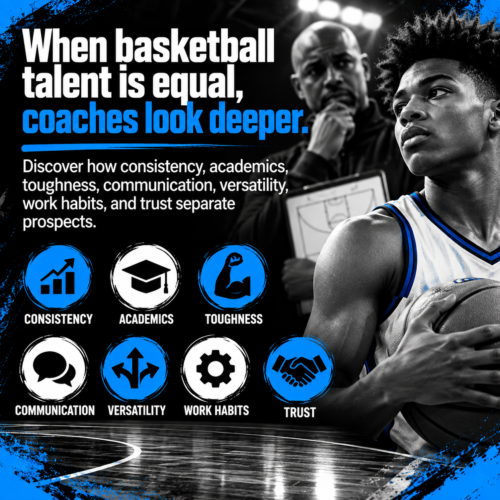
When Talent Is Equal, What Separates The Basketball Prospect?

When Talent Is Equal, What Separates The Basketball Prospect?

When Talent Is Equal, What Separates The Prospect?

College basketball recruiting is not always about identifying the most talented player in the gym. 

Sometimes the difficult decision comes when two prospects appear remarkably similar.

They may have comparable size, athleticism, statistics, skill levels, positions, and potential. 

Both may play well against quality competition. Both may have impressive film.

So what breaks the tie???

Recruiting evaluations go deeper than points, rebounds, assists, and highlight videos. 

When talent is relatively equal, everything surrounding the talent becomes increasingly important.

College coaches are evaluating the complete student-athlete.


Searcher's Main Question/Problem

High school basketball players often wonder why one prospect receives recruiting attention while another similarly talented player does not.

There may not be one single reason.

Coaches could be examining factors that never appear in a box score:

  • Consistent competitive effort
  • Strong academic performance
  • Positive body language
  • Effective player communication
  • Multiple positional abilities
  • Reliable daily habits
  • Coachable competitive mindset
  • Dependable personal character

Talent may get a prospect evaluated. Trust can help move that prospect further through the recruiting process.


Original Analysis

The closer two players are athletically, the more important the smaller details become.

A college coach is not simply recruiting what a player can do today. 

The coach is considering what that athlete could become inside a college program.

Can the player accept coaching?

Will they compete when shots are not falling?

Can they handle limited playing time?

Will they communicate?

Can they defend multiple positions?

Will they attend class, remain academically eligible, and represent the program appropriately?

Those questions matter because recruiting is an investment of scholarships, roster spots, coaching time, player development, and program resources.


Supporting Information

Statistics provide valuable information, but they cannot measure everything.

Evaluators should watch what happens away from the basketball.

Watch the bench. 

Watch warmups. 

Watch reactions after mistakes. 

Watch interactions with teammates, coaches, officials, opponents, and parents.

Small behaviors can reveal significant information.


Actionable Advice

Players trying to separate themselves should concentrate on controllable areas:

  • Compete every possession
  • Communicate with teammates
  • Maintain strong academics
  • Develop positional versatility
  • Improve physical conditioning
  • Demonstrate consistent habits
  • Respond positively coaching
  • Become highly dependable

Do these things consistently not only when college coaches are watching.


Mistakes/Challenges

One major mistake is believing talent automatically produces recruiting opportunities.

Another is concentrating entirely on scoring.

College programs need players who can fill roles, defend, communicate, practice hard, handle adversity, improve, and contribute to winning basketball.

A prospect who requires the ball constantly may actually have fewer ways to help a college team.


Al Woods Perspective

After decades around basketball, I believe one word deserves more attention in recruiting: trust!!!

College coaches need players they can trust.

Trust them to practice. 

Trust them academically. 

Trust them defensively. 

Trust them to accept coaching. 

Trust them when adversity arrives.

When two prospects possess similar talent, the player who consistently demonstrates reliability can create meaningful separation.


Conclusion

Talent remains important. 

Size, athleticism, skill, production, and potential will always influence recruiting evaluations.

But talent is only part of the evaluation.

When prospects appear equal, the deciding factors can become consistency, academics, toughness, communication, versatility, work habits, character, coachability, and trust.

The question for every prospect should therefore go beyond, “Am I talented enough?”

Ask something harder:

“What separates me when everyone else is talented too?”


Author/Byline

Al Woods | Woods Recruiting

Al Woods is the founder of Woods Recruiting and a longtime basketball scout with decades of experience in the game. 

A former high school, college, and professional basketball player, Woods evaluates prospects while providing independent scouting reports, recruiting education, and basketball insight designed to help student-athletes, families, coaches, and the basketball community better understand the recruiting process.

Kensley Malcore Emerging 2027 Stretch Forward With Recruiting Upside

Kensley Malcore Emerging 2027 Stretch Forward With Recruiting Upside

Kensley Malcore Brings Size, Versatility And Stretch-Four Potential

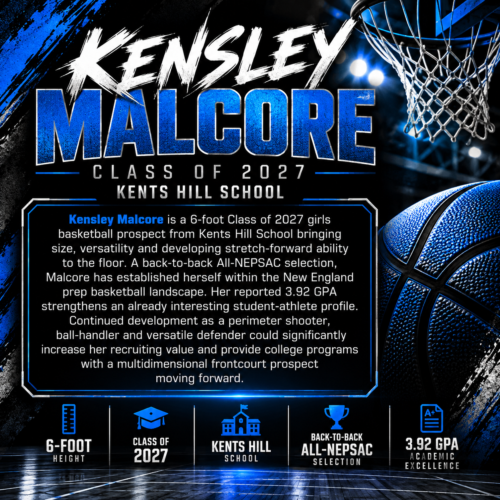
Kensley Malcore is a 6-foot Class of 2027 girls basketball prospect from Kents Hill School in Maine who brings size, versatility and intriguing stretch-forward potential to the frontcourt.


Malcore has established herself within New England basketball, earning All-NEPSAC recognition following both the 2024-25 and 2025-26 seasons. 

Her combination of length and developing perimeter ability provides possibilities as a modern forward capable of impacting different areas of the floor. 

Malcore's profile indicates a player who can operate around the basket while continuing to expand her effectiveness away from it. 

Prep Girls Hoops lists her at 6-foot and has included her among its Class of 2027 New England prospects. 

Malcore also brings grassroots experience to her development. 

Her player profile identifies her with the Mass Huskies, while available circuit statistics show her producing efficiently in limited minutes, including 56.5 percent shooting across six recorded games. 

Academically, Malcore reports a 3.92 GPA, adding another positive dimension to her student-athlete profile. 

Continued development of her perimeter shooting, ball-handling, lateral mobility and overall offensive versatility could strengthen her recruiting opportunities as she progresses through her senior season.

Player Overview

Malcore's foundation begins with her 6-foot frame and ability to play multiple frontcourt roles. 

She has been listed externally as both a center/small forward and across multiple positions on Kents Hill rosters, reinforcing the versatility within her profile.

Her back-to-back All-NEPSAC recognition is particularly noteworthy because it provides documented evidence of her production and impact within the New England prep basketball environment. 


Offensive Skill Evaluation

  • Developing perimeter shooting potential
  • Effective interior scoring presence
  • Provides stretch-forward possibilities
  • Finishes efficiently around basket
  • Creates useful floor spacing


Defensive Evaluation

  • Uses length around basket
  • Provides frontcourt defensive versatility
  • Competes on defensive glass
  • Can defend multiple matchups
  • Developing perimeter defensive mobility


Basketball IQ

  • Understands frontcourt positioning well
  • Recognizes available scoring opportunities
  • Plays within offensive structure
  • Makes productive positioning decisions
  • Understands spacing and movement


Athleticism / Physical Tools

At 6-foot, Malcore possesses useful positional size for the girls basketball level. 

Her physical profile gives her opportunities to contribute around the basket while developing into a more versatile face-up forward.

Improving lateral quickness, strength, explosiveness and overall mobility would expand the number of assignments she can handle at the college level.


Intangibles

  • Strong reported academic profile
  • Proven prep basketball experience
  • Competes against quality competition
  • Continues expanding complete game
  • Brings valuable positional versatility


Areas For Improvement

  • Increase perimeter shooting consistency
  • Expand off-dribble creation ability
  • Improve lateral defensive quickness
  • Strengthen ball-handling under pressure
  • Develop consistent physical strength


College Projection

Malcore's recruiting value could ultimately center around whether she develops into a dependable stretch forward rather than being limited primarily to interior responsibilities.

That distinction matters. 

At 6-foot, consistently stretching defenses, handling the basketball, defending away from the basket and making quick decisions would make her more adaptable to different college systems. 

Her documented All-NEPSAC recognition gives college programs another meaningful evaluation point. 


Al Woods Evaluation

Kensley Malcore is an intriguing Class of 2027 prospect because there are already several pieces in place: size, strong academics, prep-school experience, grassroots competition and documented postseason recognition.

The biggest question is how far the perimeter portion of her game develops. 

Becoming a legitimate stretch-four requires more than occasionally making outside shots. 

Malcore must consistently demonstrate shooting range, mobility, decision-making and the ability to punish defenders who close out aggressively.

Those developments could significantly expand her college recruiting possibilities.


Final Evaluation 

Kensley Malcore is a 6-foot Class of 2027 girls basketball prospect whose size, versatility, academics and All-NEPSAC recognition create an intriguing recruiting foundation. 

Her ability to develop into a dependable stretch forward could become an important separator. 

Continued improvement as a perimeter shooter, ball-handler and versatile defender should strengthen her overall profile. 

With additional development and continued production, Malcore has an opportunity to attract increased attention from college basketball programs throughout her senior season ahead.

Vivian Watts Emerging 2027 Guard With Two-Way Potential

Vivian Watts Emerging 2027 Guard With Two-Way Potential

Vivian Watts Emerging 2027 Guard With Two-Way Potential

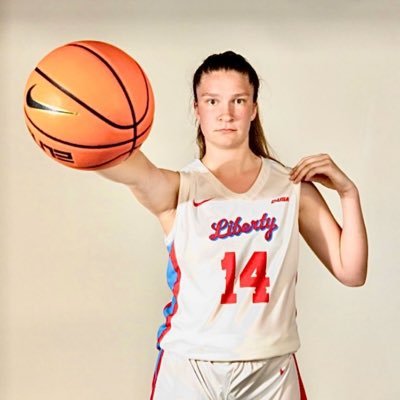
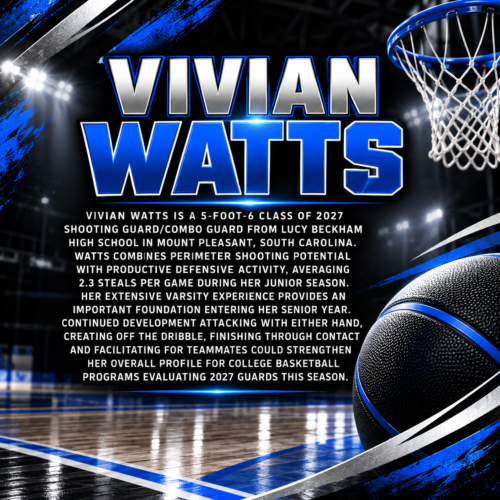
Vivian Watts is a 5-foot-6 Class of 2027 shooting guard/combo guard from Lucy Beckham High School in Mount Pleasant, South Carolina, who continues building an intriguing recruiting profile through production, perimeter shooting and defensive activity.

Watts competes with the SC Lady Sixers on the grassroots circuit and reports a 3.8 GPA, providing another positive component to her overall student-athlete profile.

Watts has accumulated considerable varsity experience entering her senior season. 

As a junior, she averaged 8.9 points, 3.4 rebounds, 1.5 assists and 2.3 steals per game across 22 appearances. 

Her defensive numbers particularly stand out for a 5-foot-6 perimeter player, illustrating the activity and competitiveness she can bring on that end of the floor.

Offensively, Watts has demonstrated the ability to make perimeter shots and capitalize when defenders close aggressively. 

Her continued development creating off the dribble, finishing through traffic and becoming equally comfortable attacking in either direction could expand her offensive versatility.

For college programs evaluating the 2027 class, Watts presents an experienced guard whose shooting potential, defensive energy, academics and willingness to compete warrant continued evaluation.

Player Overview

Watts enters her senior season with four years of varsity experience dating back to eighth grade. 

MaxPreps records 80 varsity appearances and shows substantial statistical progression, from 2.6 points per game in eighth grade to 8.9 points as a junior. 

Her junior season also included 3.4 rebounds, 1.5 assists and 2.3 steals per game.


Offensive Evaluation

  • Reliable catch-and-shoot perimeter threat
  • Attacks aggressive defensive closeouts
  • Provides secondary ball handling
  • Moves effectively without basketball
  • Capable of scoring bursts

Watts' perimeter shooting appears to be one of the more identifiable elements of her offensive game. 

She also produced a 21-point performance against Hanahan during her junior season.


Defensive Evaluation

  • Active perimeter passing lanes
  • Generates steals and deflections
  • Competes with consistent energy
  • Applies pressure against guards
  • Anticipates developing offensive actions

Her 2.3 steals per game as a junior provide statistical evidence of her defensive activity. 

Watts recorded six steals in a December 2025 victory over Hanahan, demonstrating her ability to turn defensive pressure into possessions.


Basketball IQ

  • Understands perimeter floor spacing
  • Recognizes available driving opportunities
  • Reads defensive passing lanes
  • Makes purposeful off-ball movements
  • Understands complementary guard responsibilities

Athleticism/Physical Tools

At 5-foot-6, Watts will need to maximize quickness, positioning and skill rather than relying on superior positional size. 

Her defensive activity suggests useful anticipation and reaction ability, while continued physical development should help her handle stronger guards and finish more effectively against contact.


Intangibles

  • Brings consistent competitive energy
  • Experienced four-year varsity contributor
  • Demonstrates strong academic commitment
  • Plays aggressively on defense
  • Embraces multiple backcourt responsibilities


Areas For Improvement

  • Strengthen left-hand attacking ability
  • Improve finishing through contact
  • Expand off-dribble scoring package
  • Develop stronger playmaking consistency
  • Continue adding physical strength

An independent evaluation identified attacking and finishing with her left hand as an area for continued development. 

Improving that part of her game could make defenders less capable of influencing her toward one side of the floor.


College Projection

Watts profiles as a guard worth evaluating across appropriate college levels because of her combination of shooting potential, defensive activity, varsity experience and academics. 

Her senior season represents an important opportunity to demonstrate greater offensive consistency, improved creation and continued defensive production. 

System fit could ultimately be significant because her shooting and defensive energy offer potential value in a complementary backcourt role.


Al Woods Evaluation

Vivian Watts brings several qualities that deserve attention: varsity experience, perimeter shooting potential, defensive production and academic performance. 

The next step is demonstrating that those individual strengths can consistently translate into winning possessions against quality competition. 

Her size means skill development becomes especially important. Improving her handle, left-hand attacks, finishing and playmaking would broaden her offensive profile while making her more difficult to defend.


Final Evaluation

Vivian Watts is an experienced Class of 2027 guard whose perimeter shooting, defensive activity and competitive approach provide a solid foundation for college evaluation. 

Her junior production showed continued development, particularly defensively, where she averaged 2.3 steals per game. 

Continued improvement attacking with either hand, finishing against contact, creating off the dribble and facilitating should strengthen her versatility. 

Watts' senior season provides an important opportunity to demonstrate continued growth and establish her college basketball potential.

Laikyn Moore Emerging As Versatile 2027 Girls Basketball Prospect

Laikyn Moore Emerging As Versatile 2027 Girls Basketball Prospect

Laikyn Moore Brings Production Athleticism To Biloxi Backcourt

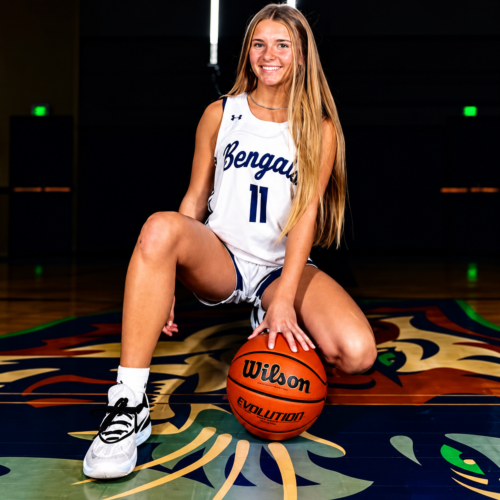
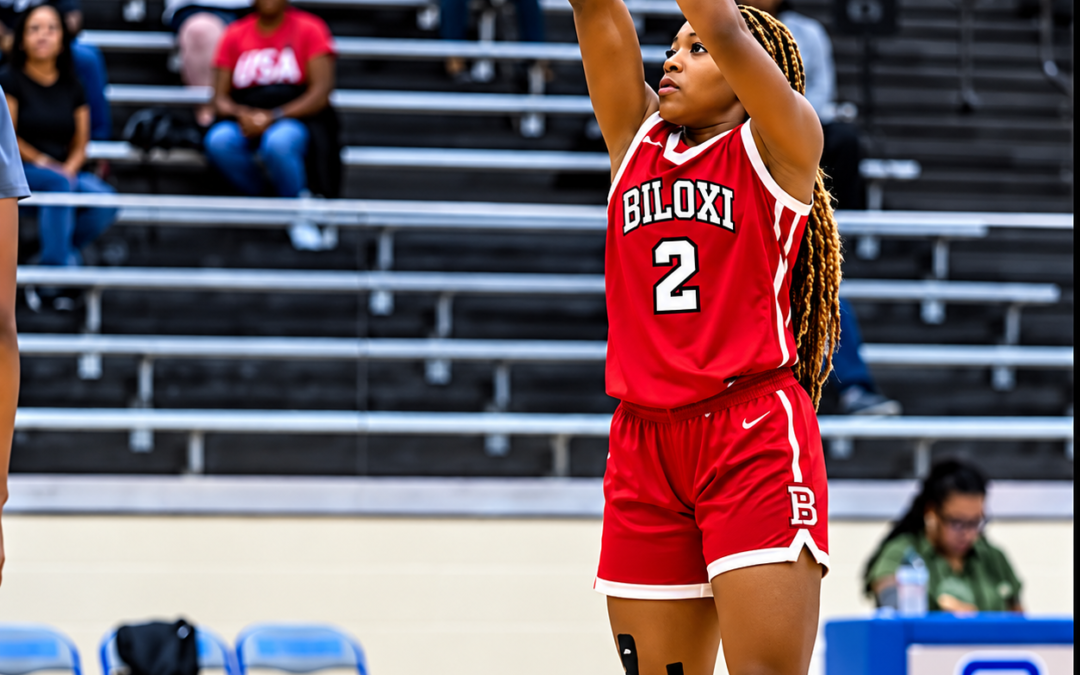
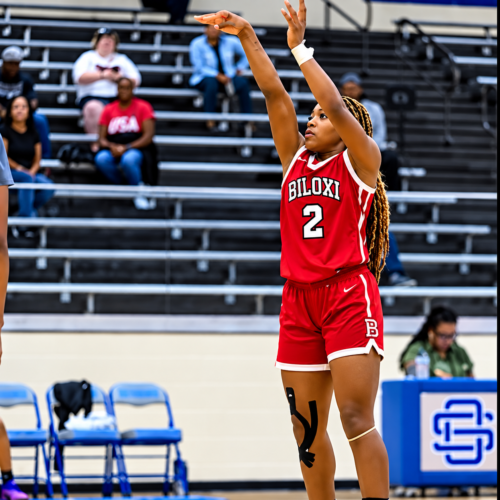
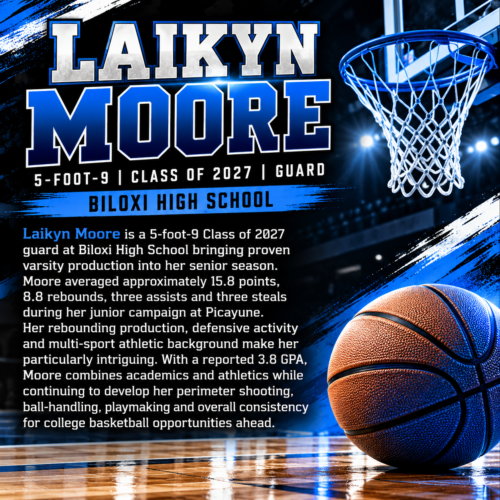
Laikyn Moore is a 5-foot-9 Class of 2027 guard at Biloxi High School in Mississippi who enters her senior season with proven varsity production, multi-sport athleticism and an impressive academic profile.

Moore previously attended Picayune High School, where she produced an outstanding junior campaign, averaging approximately 15.8 points, 8.8 rebounds, three assists and three steals per game. 

Her ability to impact multiple statistical categories immediately stands out for a guard.

Moore's combination of scoring, rebounding and defensive production suggests a player capable of influencing games beyond one specific role. 

She can operate at either guard position while possessing the physical strength and athleticism to contribute around the basket. 

Her background as a multi-sport athlete, including success in the high jump, adds another dimension to her overall evaluation.

Academically, Moore reports a 3.8 GPA and 22 ACT, giving college programs additional reasons to evaluate her complete student-athlete profile. 

Her move to Biloxi provides another opportunity to demonstrate her versatility against quality competition. 

Continued development as a perimeter shooter, ball-handler and decision-maker could further strengthen Moore's college basketball recruiting potential during an important senior season.


Player Overview

Moore brings an unusual statistical profile for a 5-foot-9 guard. 

Her junior production at Picayune demonstrated scoring ability while her rebounding and defensive numbers showed she can contribute well beyond putting points on the scoreboard.

Her versatility should be an important component of her evaluation. 

Moore has experience at both guard spots and has also been identified as capable of playing on the wing. 

Her 3.8 GPA, multi-sport background and proven high-school production create a well-rounded profile entering her senior year.


Offensive Evaluation

  • Attacks basket with strength
  • Produces consistent scoring numbers
  • Contributes on offensive glass
  • Plays multiple perimeter positions
  • Creates opportunities off penetration

Moore's offensive value begins with production and versatility. 

She has demonstrated an ability to score while contributing as a rebounder and facilitator. 

Her physical build can help her absorb contact and compete around the basket.

Continued improvement in perimeter shooting and advanced ball-handling would make her more difficult to defend and potentially expand the number of roles she could fill at the college level.


Defensive Evaluation

  • Generates steals with activity
  • Rebounds exceptionally for guard
  • Competes with physical toughness
  • Uses athleticism defensively well
  • Provides positional defensive versatility

Moore's junior statistics provide evidence of significant defensive activity. 

Averaging approximately three steals per game while also producing strong rebounding numbers demonstrates her willingness to impact possessions without the basketball.

Her ability to defend multiple perimeter positions will be important when college programs evaluate how her game translates to their defensive systems.


Basketball IQ

  • Understands multiple positional responsibilities
  • Recognizes opportunities in transition
  • Contributes beyond scoring production
  • Reads developing offensive situations
  • Shows productive court awareness

Moore's statistical versatility suggests an understanding of how to influence different areas of the game. 

Developing even greater consistency with pace, reads and decision-making should strengthen her effectiveness as a college prospect.


Athleticism/Physical Tools

Moore's multi-sport background is one of the more intriguing elements of her profile. 

At approximately 5-foot-9 with a strong frame, she combines size for the backcourt with demonstrated explosiveness.

Her reported success as a high jumper provides additional context regarding her lower-body athletic ability. 

That athleticism appears particularly relevant when considering her exceptional rebounding production for a guard.


Intangibles

  • Proven multi-sport competitive background
  • Strong academic performance maintained
  • Consistently impacts multiple categories
  • Brings physical competitive mentality
  • Demonstrates productive athletic versatility

Her combination of academics, athletics and basketball production strengthens the overall student-athlete profile. 

Changing schools entering an important senior season will also require adaptability and the ability to establish herself within a different basketball environment.


Areas For Improvement

  • Improve perimeter shooting consistency
  • Tighten handle under pressure
  • Refine half-court decision-making
  • Develop consistent finishing package
  • Expand playmaking against pressure

Improvement in these areas could significantly strengthen Moore's projection. 

Establishing herself as a dependable perimeter shooter would be particularly valuable because defenders would have fewer opportunities to play off her and take away driving lanes.


College Projection

Moore has several qualities capable of attracting college attention: established varsity production, positional versatility, rebounding, defensive activity, athleticism and strong academics.

Her senior season at Biloxi will provide an important evaluation period. 

College coaches should watch how effectively her production transfers into a new environment, particularly her shooting efficiency, ball security, defensive versatility and ability to create offense against stronger competition.

The combination of a 3.8 GPA and productive basketball résumé should allow multiple academic and athletic factors to enter the recruiting equation.


Al Woods Evaluation

Laikyn Moore is interesting because her evaluation cannot be reduced to points per game. 

The rebounding immediately gets my attention. 

A 5-foot-9 guard producing close to nine rebounds per game demonstrates activity, athletic ability and willingness to compete in areas many perimeter players avoid.

The defensive production matters as well. 

Approximately three steals per game combined with strong rebounding numbers gives college coaches something tangible to investigate on film.

The next question is translation. 

Can Moore consistently shoot it from the perimeter? 

Can she handle pressure? 

Can she create for teammates while limiting turnovers? 

Can she defend college-level guards?

Those areas should determine how high her recruiting ceiling ultimately climbs.


Final Evaluation

Laikyn Moore enters her senior season as a productive 2027 guard with athleticism, positional versatility and an impressive multi-sport background. 

Her junior production demonstrates an ability to score, rebound and create defensive activity at meaningful levels. 

Moore's 3.8 GPA strengthens an already interesting student-athlete profile. 

Continued development as a perimeter shooter, ball-handler and decision-maker could significantly expand her college options. 

Her senior season at Biloxi should provide college coaches another important evaluation opportunity.